Author: Jessamyn West

  • Mailbag: Oramel Partridge, Cabinetmaker

    A woman wrote in to us with images of a dry sink she had in her possession, wanting to know more about the man who made it.

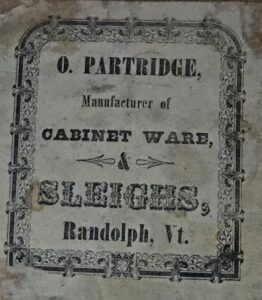
    A lot of what we know about Oramel Partridge is from public records. He was born in 1799 and died in 1868. He had a wife, Lucy and several children at least one of whom grew into adulthood. He made cabinets and sleighs as you can see from the label. Here’s a link to his FindAGrave page

    https://www.findagrave.com/memorial/196282745/oramel-partridge

    He was, as near as I can tell, a descendant of people who were early colonists of the US. You can see more at this link on FamilySearch with a (free) login.

    https://www.familysearch.org/en/tree/person/details/KT4L-Z5K

    He and his wife passed within a few weeks of each other, you can read an obit for the two of them here in the Vermont Journal.

    https://www.newspapers.com/article/vermont-journal-oramel-partridge-lucy-c/184316704

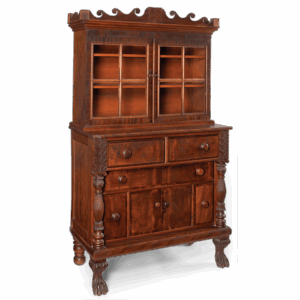
    Very few of his creations survive, possibly only one or two. Here is a short quote from an article I read which noted him in Antiquities and Fine Art Magazine in 2015.

    “Oramel Partridge, born in Norwich, Vermont, learned his trade from Isaac Reed in Randolph, where he opened a cabinetmaking shop in 1822 and where he remained his entire life. This sideboard/bookcase represents his only known surviving work. It was commissioned by Aaron Storrs, who was a charter member of the town of Randolph, Vermont, in 1781, and silently proclaims his status in the community.”

    I’m attaching a photograph of the item from that article.

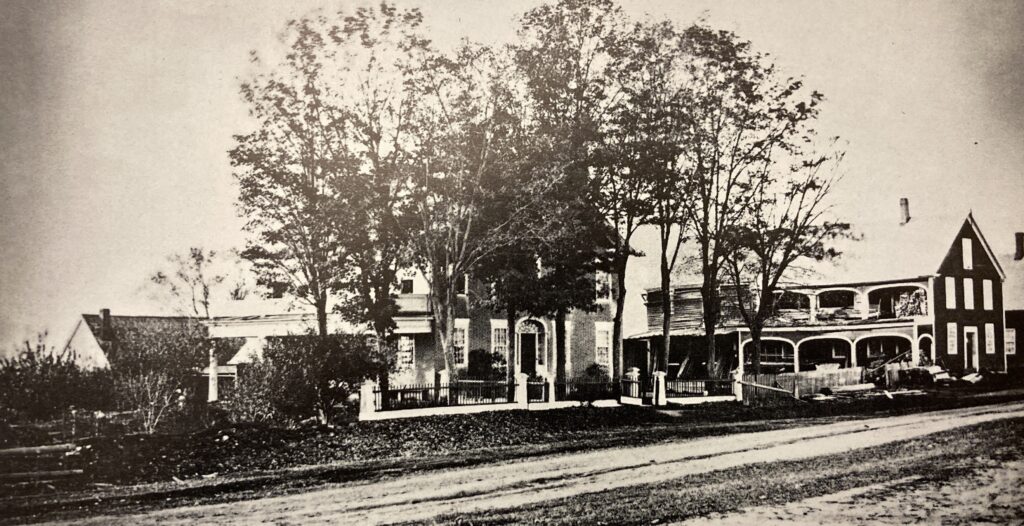
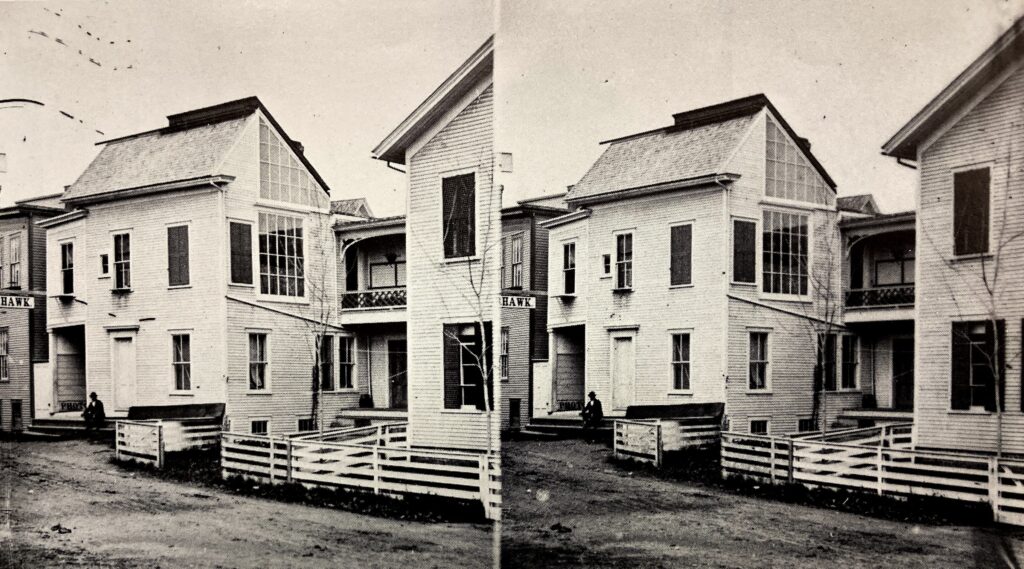
    From Wes Herwig’s book Early Photographs of Randolph, Vermont, we have an image of his home. The caption reads, in part: “Oramel Partridge built this brick house in 1828, and operated a cabinet shop and sleigh works next door. Some time after his death in 1868, the shop was moved across the street.”

    Oramel Partridge’s home and workshop

  • Mailbag: W. W. Bean’s Sleigh Shop

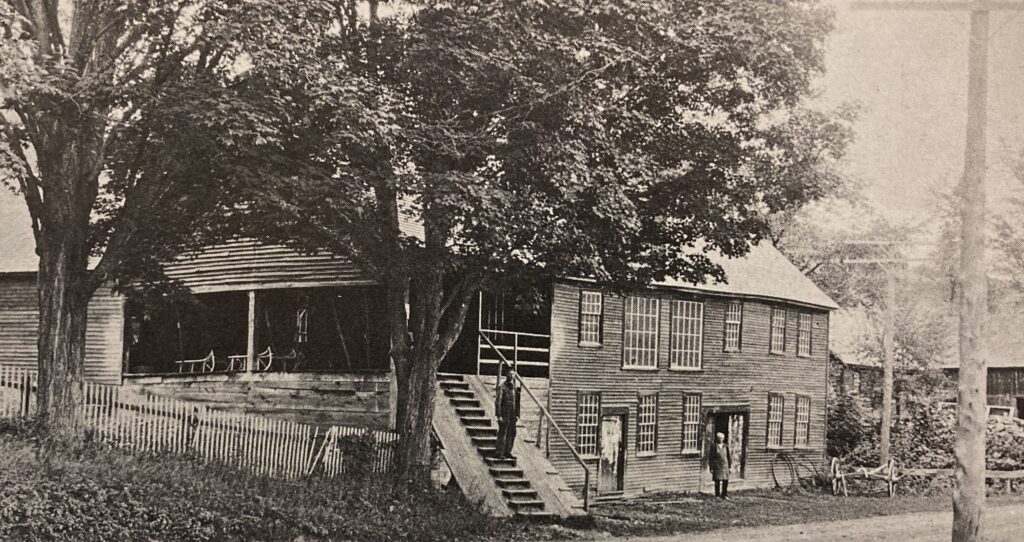
    Warren Bean in front of his factory with Jack Traverse standing on the stairs.
    William Warren Bean was a prolific sleigh manufacturer from the area and it seems like everyone has one of his sleighs in their barn or even on their porch. They were big award winners at local fairs in the late 1800s and here’s a letter to the editor proclaiming their usefulness from 1902.
     
    They were used by the liveries of both Bethel and Randolph and were sold to people you have probably heard of such as Albert Chandler, Robert Kimball, and William DuBois.  Bean also did repairs, billing the town of Randolph for hearse repairs in 1903.
     
    The factory was in operation for nearly 50 years, here’s a bit more backstory on it. Situated in West Randolph because of the availability of water power and a dam behind it, it employed a large number of people from blacksmiths to painters to lumber millers. That location was called Pleasant Valley but after the factory’s popularity, it was renamed Beanville.


  • Movie Magic in Randolph Since 1919 – A History of the Playhouse

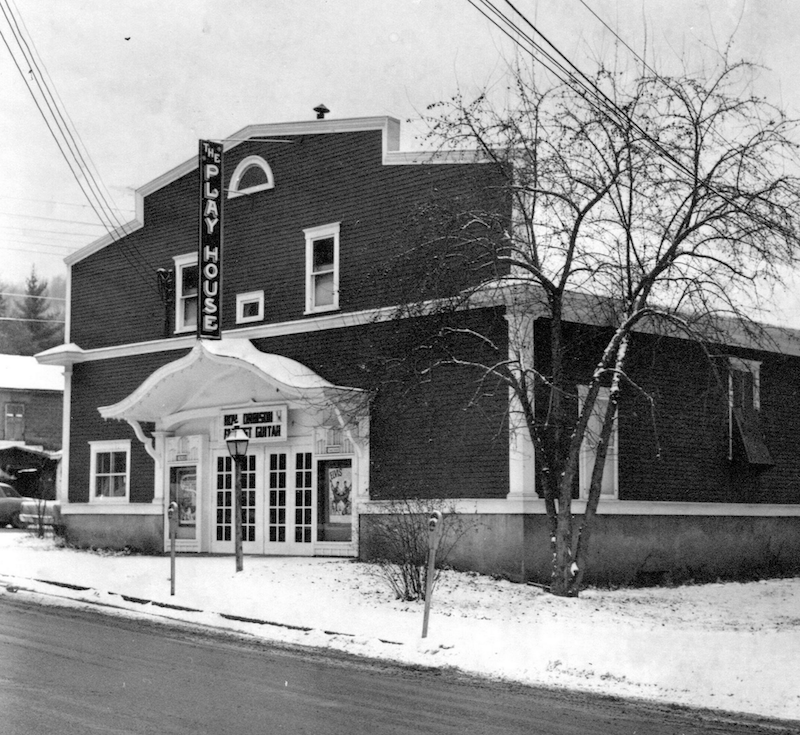
    outdoor photograph of the Play House movie theater when it had the old sign hanging up.

    Photo supplied by Trudy Deflorio

    The Playhouse on Randolph’s Main Street is Vermont’s first purpose-built movie theater and quite possibly its oldest.

    Here are some highlights from the 100+ year timeline of the movie theater that we all know and enjoy as the Playhouse Movie Theater.

    1919

    The Strand was built in 1919 by Mary Carr, a twice-widowed Irish immigrant (1844-1924) using E.L. Sault Construction. Promising “the best pictures obtainable at reasonable prices,” its opening week was announced in the Herald and News on August 7th, 1919.

    The Strand opened with A.K. Hall as its first manager. The opening movie was The Border Wireless starring William S. Hart. The first movies were silent, with Mrs. Rumrill accompanying on piano. The Chandler played free movies (accompanied by hymn singing) on Sundays because a Sunday movie ban prevented The Strand from being open.

    The Strand, along with other Vermont theaters, was a part of the Black Circuit, a collection of theaters presided over by Emma Farrington and centrally booked by Alfred Black who worked out of Boston. There were also Strand Theaters in Barre and Rutland; the one in Randolph was briefly called the New Strand.

    1920s – 1930s

    Movies cost 35¢ for adults and 10¢ for children, later raised to 50¢ for adults and 25¢ for children. Evening shows cost more and had reserved seating. The theater also hosted traveling vaudeville shows in addition to movies. It was billed in newspapers as “Orange County’s Finest Photoplay House.”
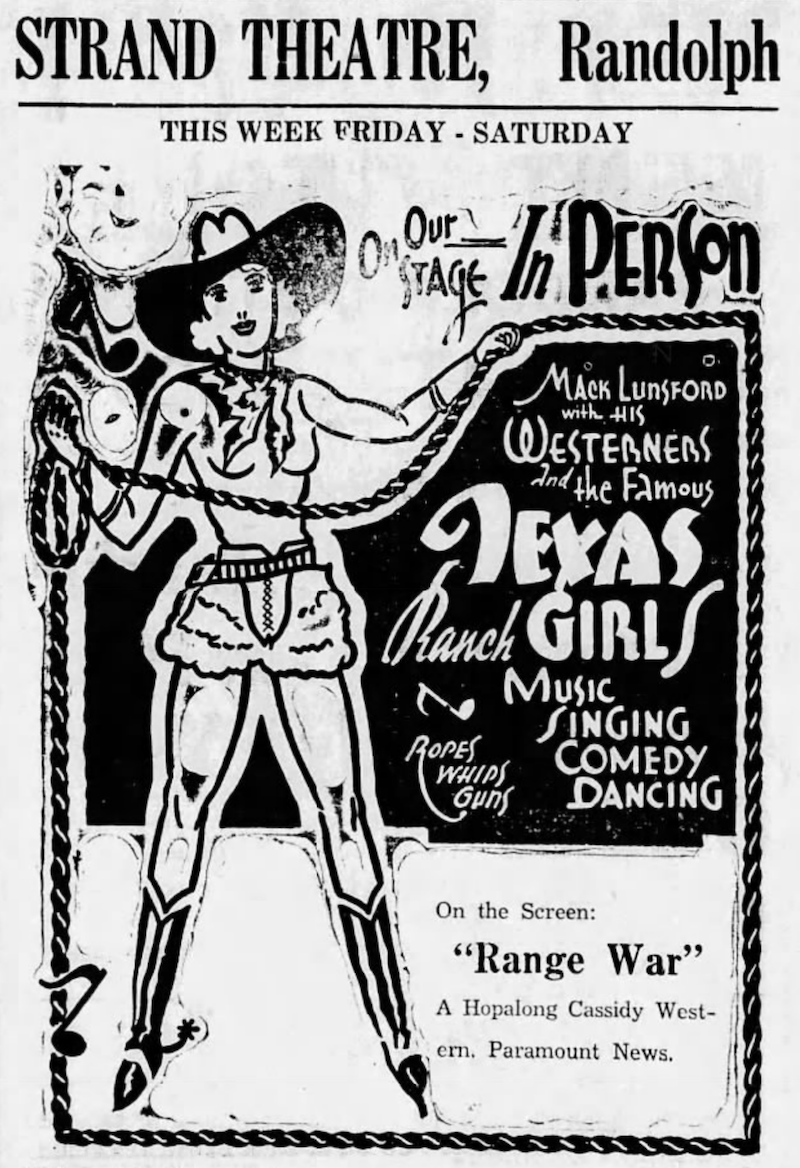
    ad from teh herald showing a live cowgirl revue

    The theater provided space for “Americanism Programs” sponsored by the American Legion’s Randolph Post No. 9, including a patriotic singalong. Free of charge.

    Mrs. Carr died in 1924 and her daughter and son-in-law Mr. and Mrs. Edward O’Brien took over ownership of the theater. The Strand started showing “talkies” in 1929 calling itself “The House of Perfect Sound.”  The O’Briens sell the theater to the Robbs in 1940.

    1940s
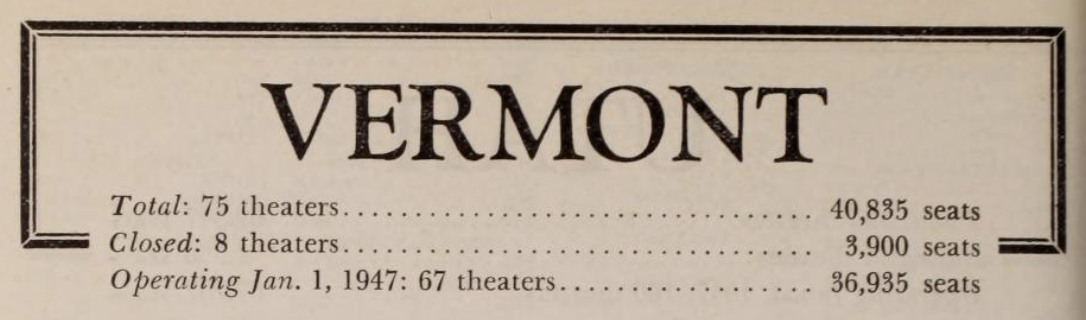
    screenshot showing how many movie theater seats are in vermont

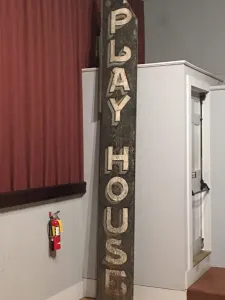
    vertical sign, black on white letters, saying Play House

    The Strand officially changed its name to The Play House under owners Jack and Barbara Robb.  Mrs. Robb painted murals on the inside of the theater along with many other updates including fluorescent lighting. A large sign was erected outside with the new name of the theater.

    The Play House offered movie pass cards for people to purchase as holiday gifts. Eight movies for three dollars!
    In 1947 Vermont had sixty-seven operating movie theaters, just under thirty-seven thousand seats.

    1950s

    The Play House installed air conditioning in May 1953 and advertised that it has “no commercials.”

    All Fresh Air Kids who are in the White River Valley were invited to the movie theater at no charge. The Play House mentions that while its property taxes have gone up 237% they have not raised the price of childrens’ tickets at all. They run a charitable program where people can save their ticket stubs and use them to direct charitable donations to local organizations.

    WDEV’s Amateur Radio Hour is broadcast in-between the two parts of the double features.

    1960s

    The Play House undergoes renovations under the management of Jack Champlain including adding rubber runners on the aisles and refurbishing the murals. A movie costs 60¢ for adults and 25¢ for children. The movie theater’s ads offered a free movie pass for couples who came to the movies, to give to their baby sitters. A Randolph resident remembers:

    [H]e would walk up and down the aisles during the movies with a little “clicker” in this hand and if you were being a bit too noisy or perhaps if you were a teenage couple being a bit too ‘lovey’ he would reach toward you with his clicker and “Click Click” – and that would be your warning to stop whatever it was you were doing and get back to watching the movie!

    The Champlains introduce a few special nights at the movie theater including Scouting Night and The Golden Age club which offered reduced admission for older movie viewers.
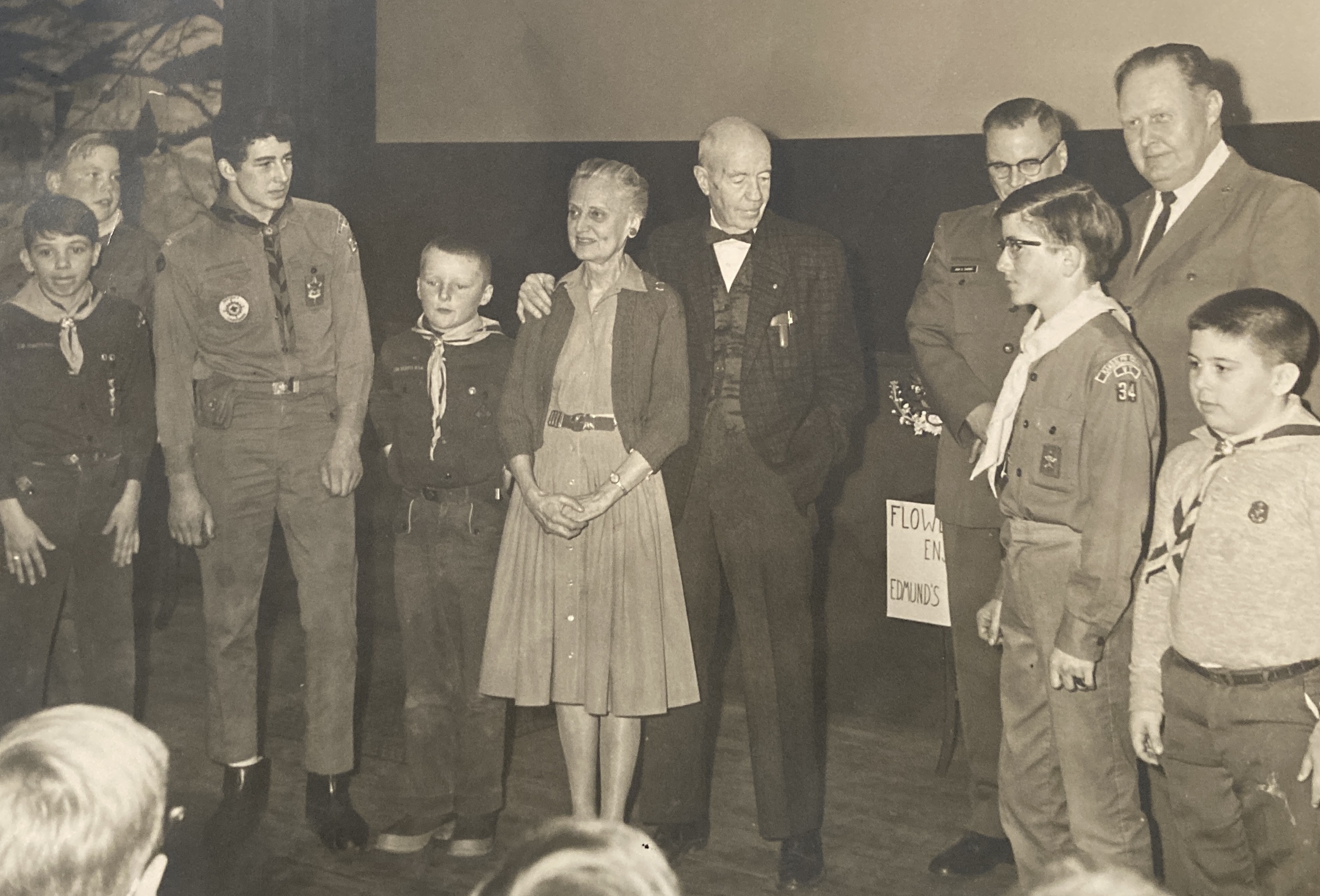
    two older people stand in front of hte play house stage surrounded by Boy Scouts.

    Mrs. and Mr. Champlain on Scouting night
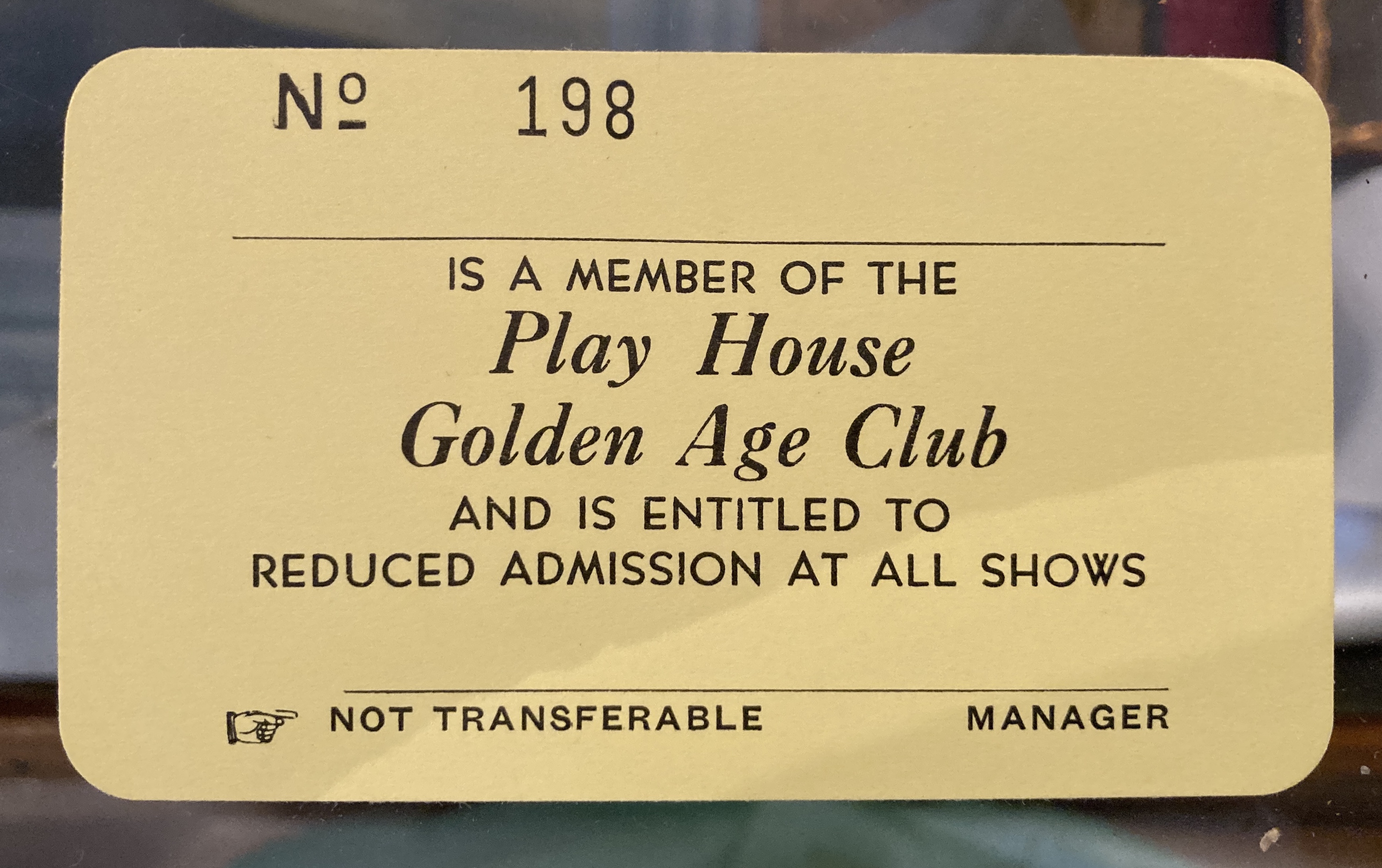
    a card for the Golden Age Club (number 198) saying that the holder is a member and qualifies for reduced admission costs.

    The Play House also hosted other events including a visit from Santa during an annual Christmas party, and a “Twist Tournament” in conjunction with the showing of the movie Twist Around the Clock. The winner received an LP record from Scribner’s Music Shop. There was a freckles contest, held in tandem with a showing of 101 Dalmatians,  where whoever had the most freckles would win a dalmatian puppy.
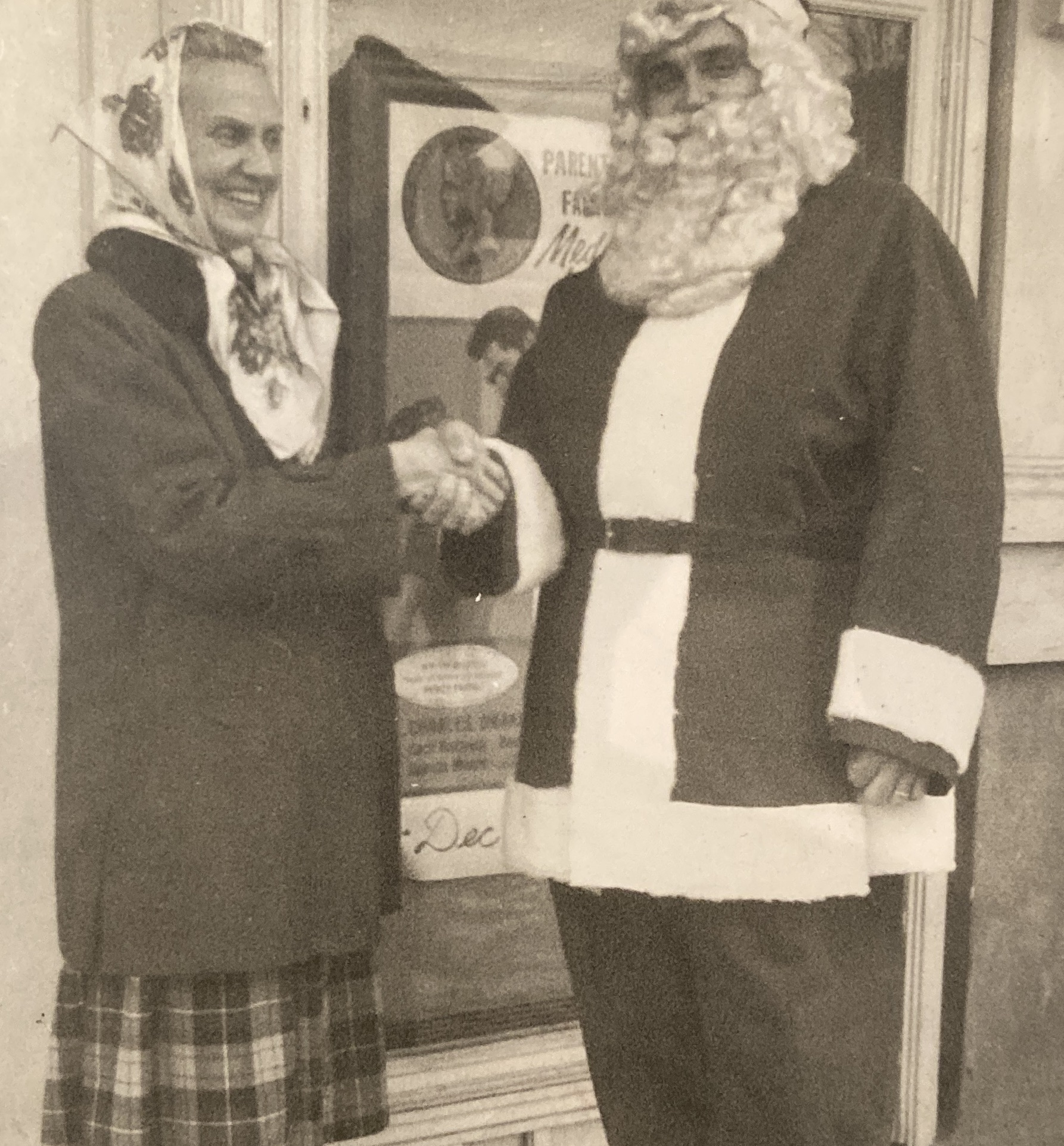
    a smiling older woman wearing a scarf shakes hands with Santa outside the movie theater

    Mrs. Champlain shakes hands with Santa

    Jack Champlain writes a letter to the editor, concerned that if the Play House doesn’t attract more older viewers playing full prices for seats, the movie theater may go dark. This may be what prompts this series of ads in the mid 1960s. Herald editor John Drysdale writes an editorial supporting the theater.
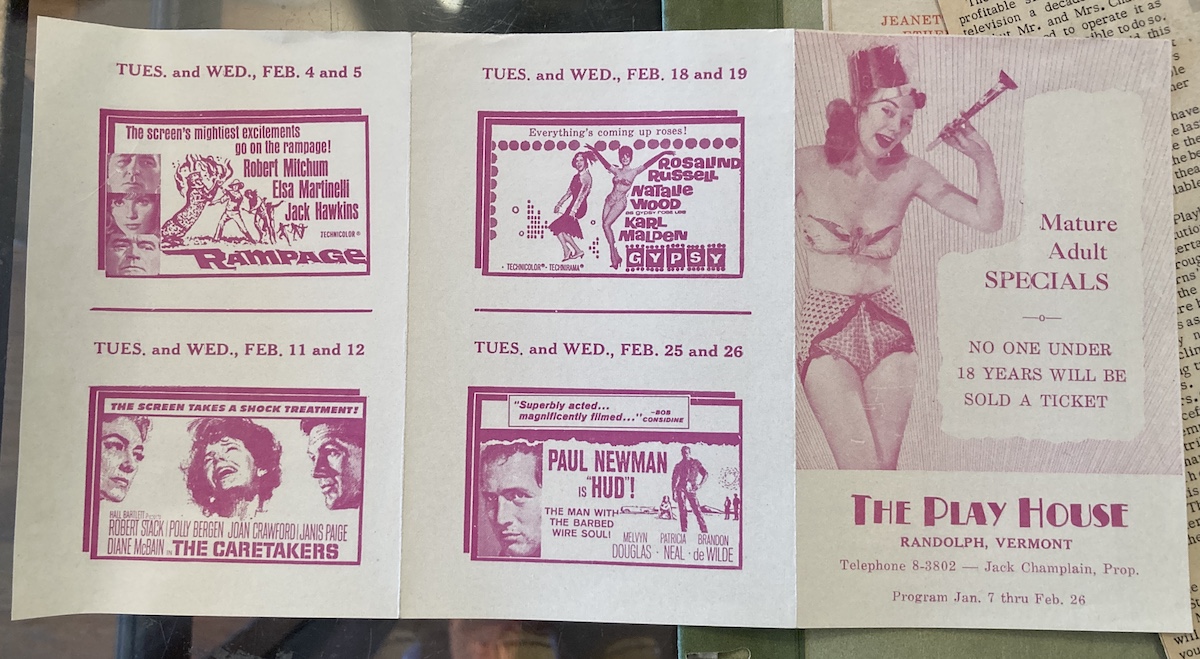
    ad for the movie theater showing a woman in a skimpy outfit saying they will be showing ADULT movies, but I think they really mean R-rated

    The movie theater closed temporarily in 1967. The Champlains sold the theater to Arnold and Clara Hendin.

    1970s

    The Playhouse is now one word. The Hendins lease it to Bethel projectionist Dave Santi for its reopening. The movie theater shows Gone with the Wind for an extended engagement (which I saw at the same theater in the 2010s!)
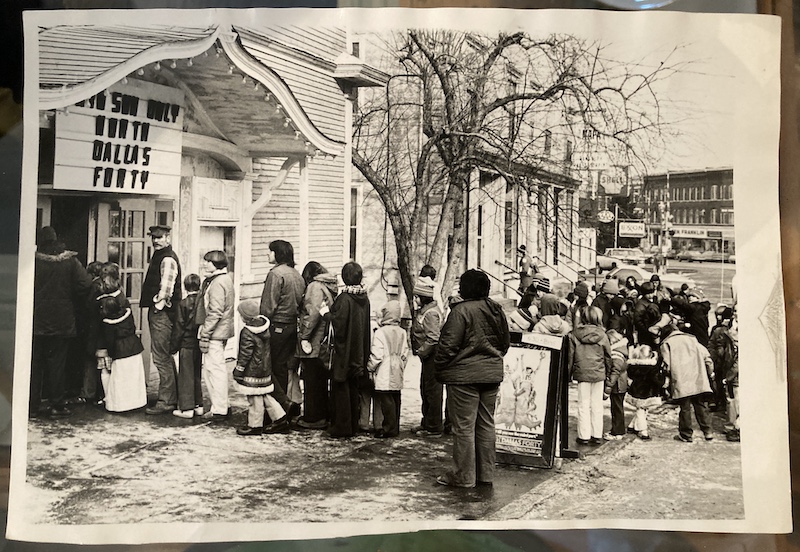
    people queuing for the North Dallas Forty movie in the late seventies

    People queue in line for North Dallas Forty

    1980s – 1990s

    Cable television came to parts of Randolph in 1982. George Rich manages the theater, still owned by the Hendins. He left to open a pair of video rental stores and the Playhouse temporarily closed in 1985, re-opening in 1986. An article in the Rutland Herald calls the theater “undistinguished and somewhat forlorn on the outside.” A movie cost $3 for adults and $1.50 for children and seniors.

    David and Tammy Tomaszewski bought and refurbished the theatre in 1988. They do extensive renovations to both the theater and the adjoining apartment.  The Playhouse hosts many events in tandem with local businesses. Free popcorn with a dinner at the Main Street Cafe.
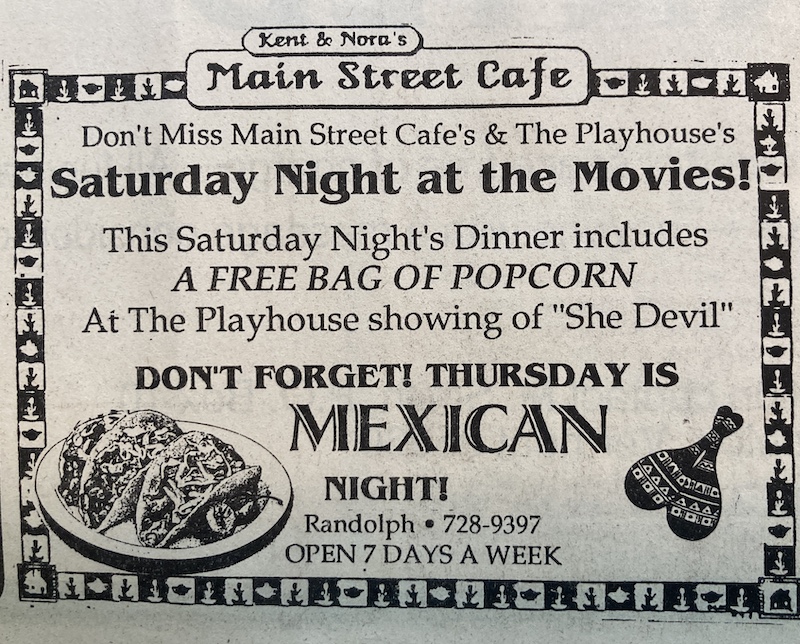
    ad for dinner at Kent and Nora's Main Street Cafe offering a free bag of popcorn with any dinner

    2000s – 2010s

    The Tomaszewskis begin also showing movies at the Bethel Drive-in giving them more flexibility in movie leasing. The Playhouse becomes a member-owned cooperative, the Randolph Playhouse Cooperative.

    As Dick Drysdale reports: “It’s a bit more complicated than that. Dave and Tammy own the Playhouse building, and they staff and operate it, but the actual business is owned by the Playhouse Cooperative, which was formed a couple of years ago to help raise money to bring digital movies to the Playhouse.” (details from the old FAQ)
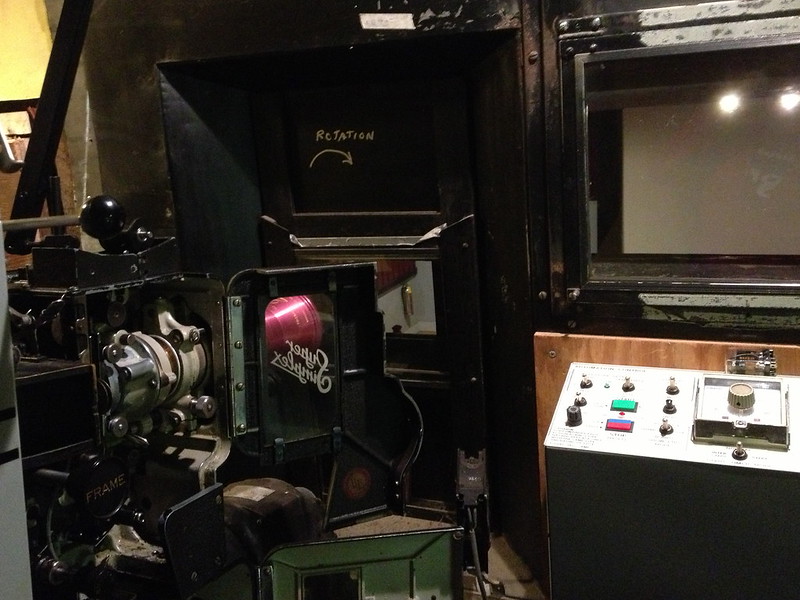
    a look at the Playhouse's old projector

    The old Playhouse projector

    Vermont House Concurrent Resolution 69, sponsored by Larry Townshend, Patsy French, and Mark MacDonald among others, is passed honoring the Playhouse Cooperative’s creative effort to save and operate Randolph’s Playhouse Movie Theatre.

    The cooperative has 182 members as of 2016. The cooperative buys the movie theater building in 2018. The Playhouse re-opens in 2018 with manager Kevin Dunwoody and then manager Lisa Wirth. It adds improvements such as the ability to show HD and 3D movies as well as accessibility improvements for deaf and blind theater-goers.

    2020s and beyond

    The theater is now owned by the non-profit Friends of the Historic Historic Playhouse Movie Theatre which took over the Playhouse Cooperative in 2020.  RTCC students partner with the Randolph Historical Society to create a series of interviews with local people who shared memories for an ongoing project called “Randolph Remembers.” Those short pieces play before the previews, linking the Playhouse (or the Play House, or the Strand, quite possibly Vermont’s oldest purpose-built movie theater) and its history with the Randolph of today.

    A movie costs $10 but there were kids $2 Saturday matinees playing all summer in 2024.

    A version of this article appeared in the Randolph Vibe.
  • Be Your Own Local Historian

    The White River Valley Herald recently celebrated its 150th anniversary at Chandler Music Hall with some good news about the history of the paper, thanks to hard work of many local people and partnerships with BALE and Newspapers.com. Such great news about the news!

    People may not know that many back issues of the Herald, along with other Vermont newspapers, are already free to read online thanks to a program from the Vermont State Archives and Records Administration (VSARA). Here’s how you can get access

    Sign Up to Get Access

    If you want to get access to this wonderful resource, follow these simple steps.

    1. Go to VSARA’s Newspapers of Record page
    2. Follow the link to set up a MyVermont account
    3. From your My Vermont page you can follow the link to Newspapers.com which will give you special access to Vermont newspapers.

    Search by keyword, or just browse by date or by newspaper. You can even make clippings to share with people who don’t have access. There are 544 papers in the collection, with  5,567,481 total pages, all scanned and searchable.

    A Brief History of Local News

    The Herald has been publishing for over 150 years, but it wasn’t Randolph’s first newspaper. That honor goes to the Weekly Wanderer which published from 1800 through 1810.

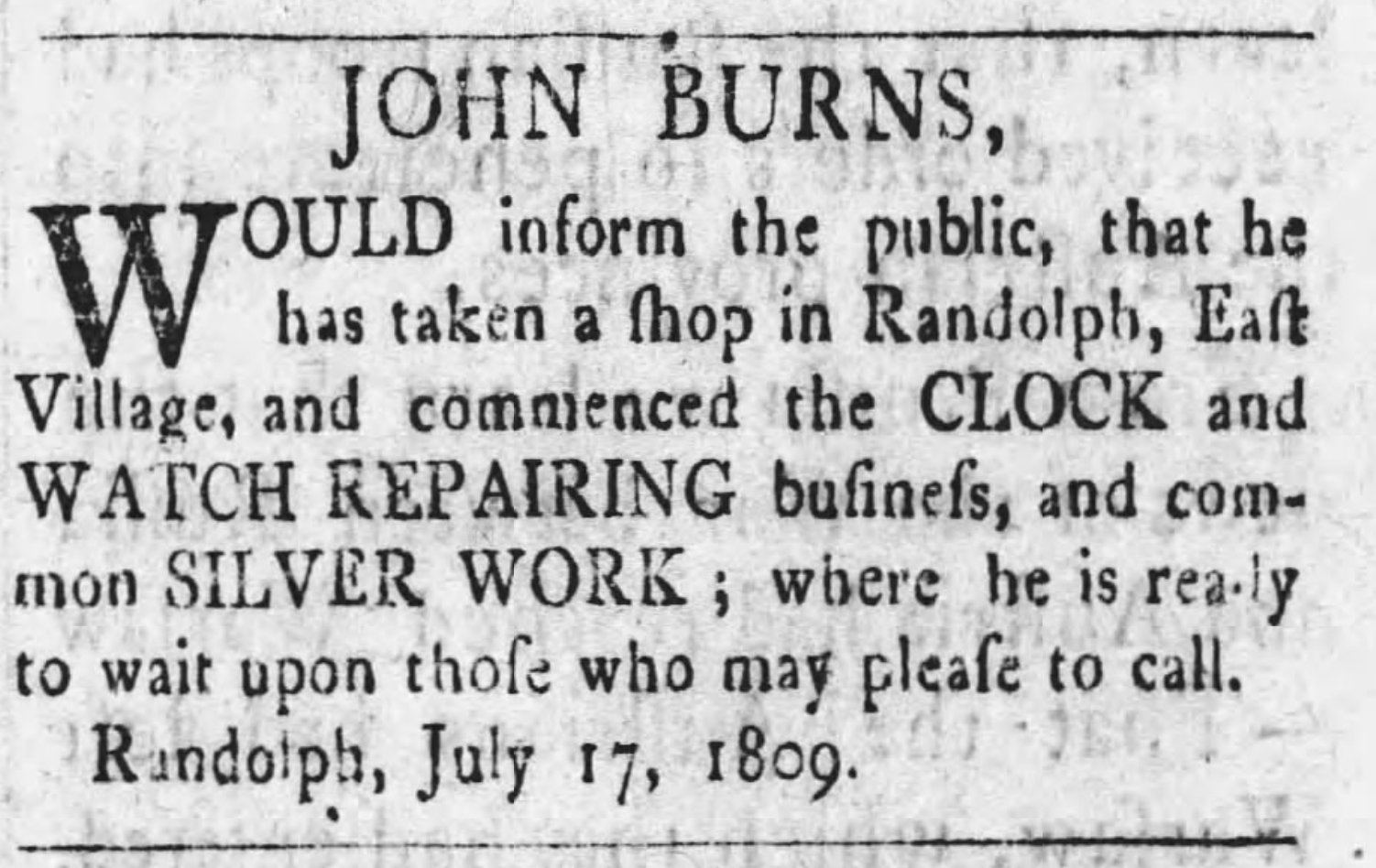
    screenshot of a classified ad that tells people there is a new clock shop in town

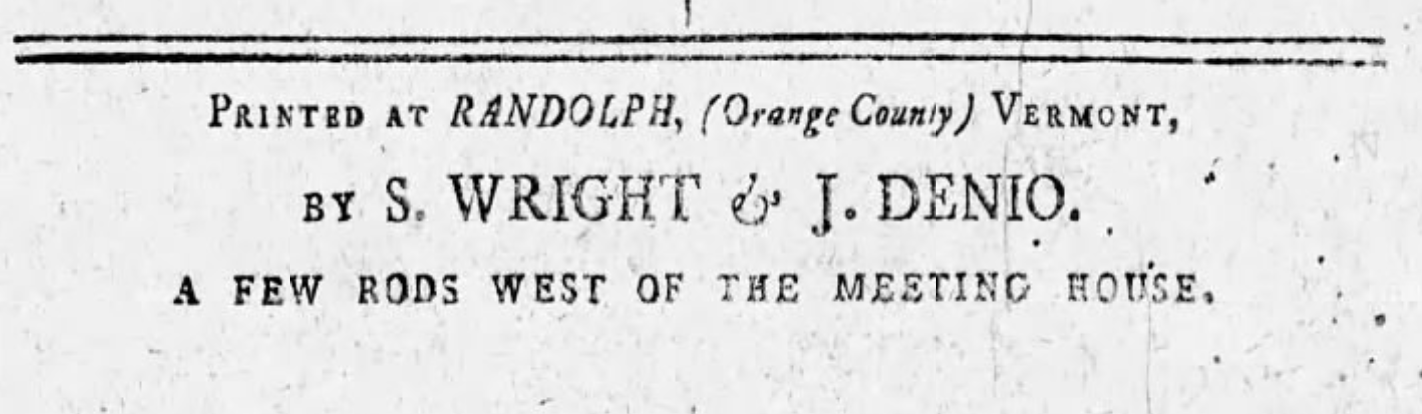
    It was printed by Sereno Wright (later joined by John Denio) back when an S was printed like an F and the location of the paper was identified by how many rods it was away from the meeting house.

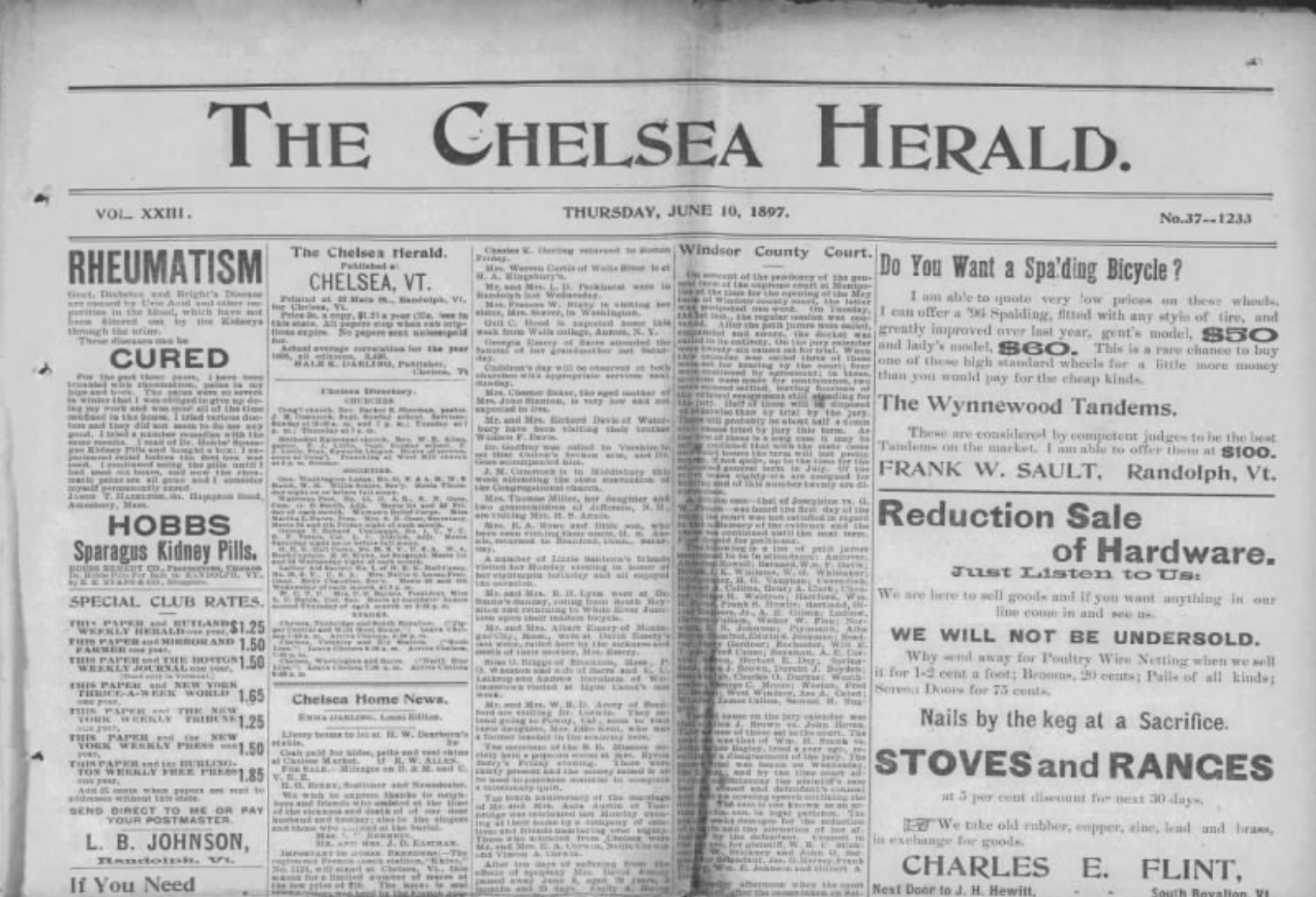
    The Herald itself used to be several Heralds. In 1877 when it was owned by Lewis P. Thayer, the Green Mountain Herald consolidated with the Chelsea Post and the Vermont News out of Bethel.

    front page of Chelsea Herald

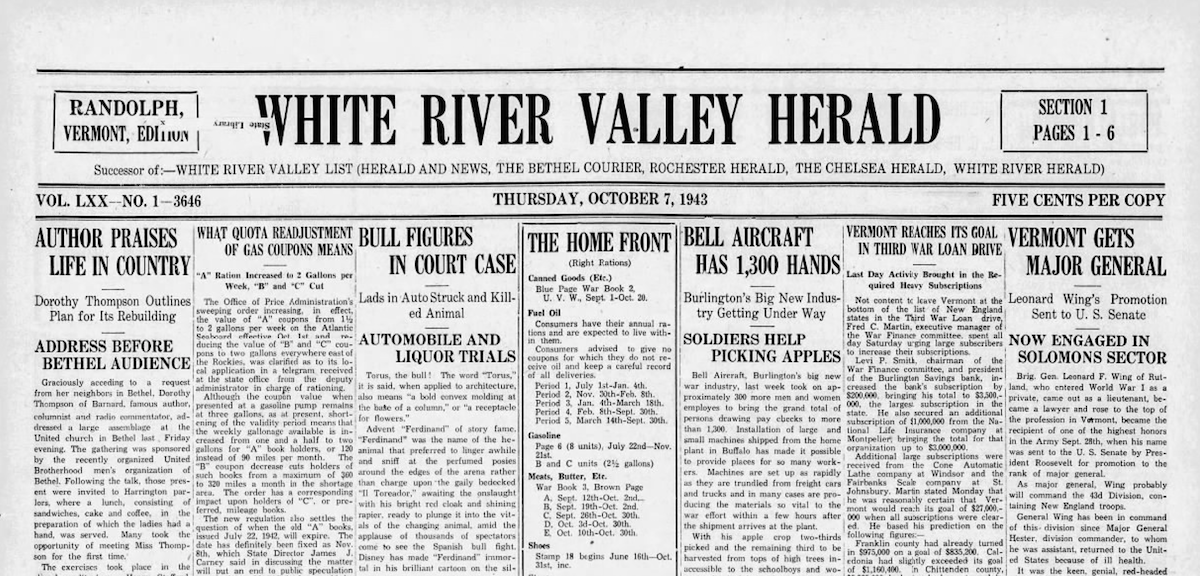
    By 1889 the Herald and News was printing reporting from over thirty communities. The paper got purchased by Luther B. Johnson in 1894 and added local editions for Rochester and South Royalton.  In 1943, right at the end of his tenure, Johnson consolidated all of his papers, including the Herald and News, the Bethel Courier, the Rochester Herald, the White River Herald, and the Chelsea Herald, into a single publication called the White River Valley Herald.

    cover of White River Valley Herald from 1943
    This newspaper was taken over and run by John Drysdale and then M. Dickey Drysdale (who changed its name to the Herald of Randolph) and now Tim Calabro who changed the paper’s name back to the White River Valley Herald in 2020.

    A Lot of Local Specialties

    There were many other newspapers operating in the region which are accessible through Newspapers.com.

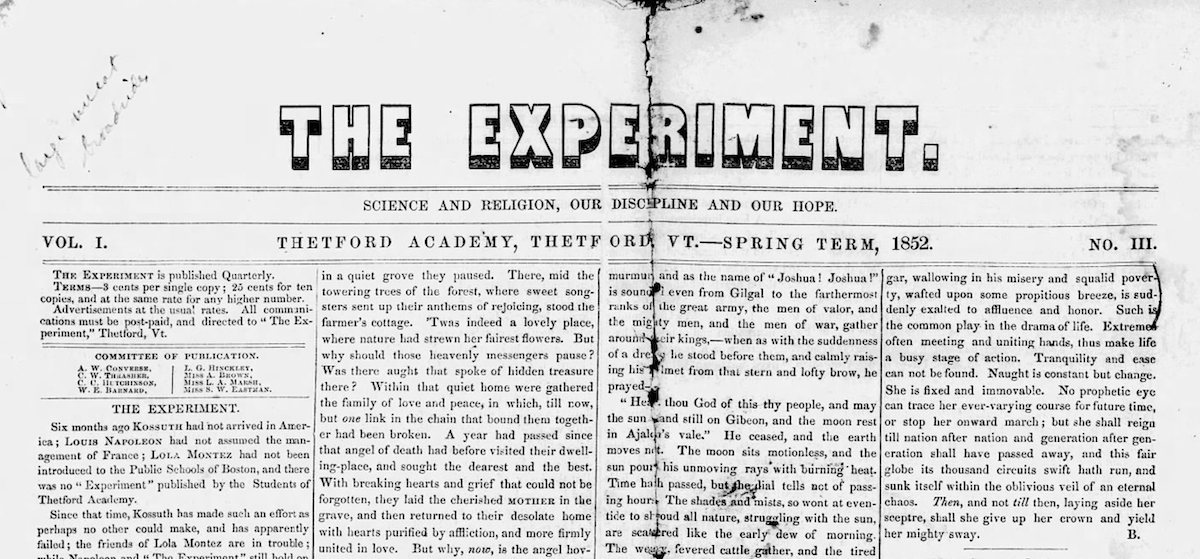
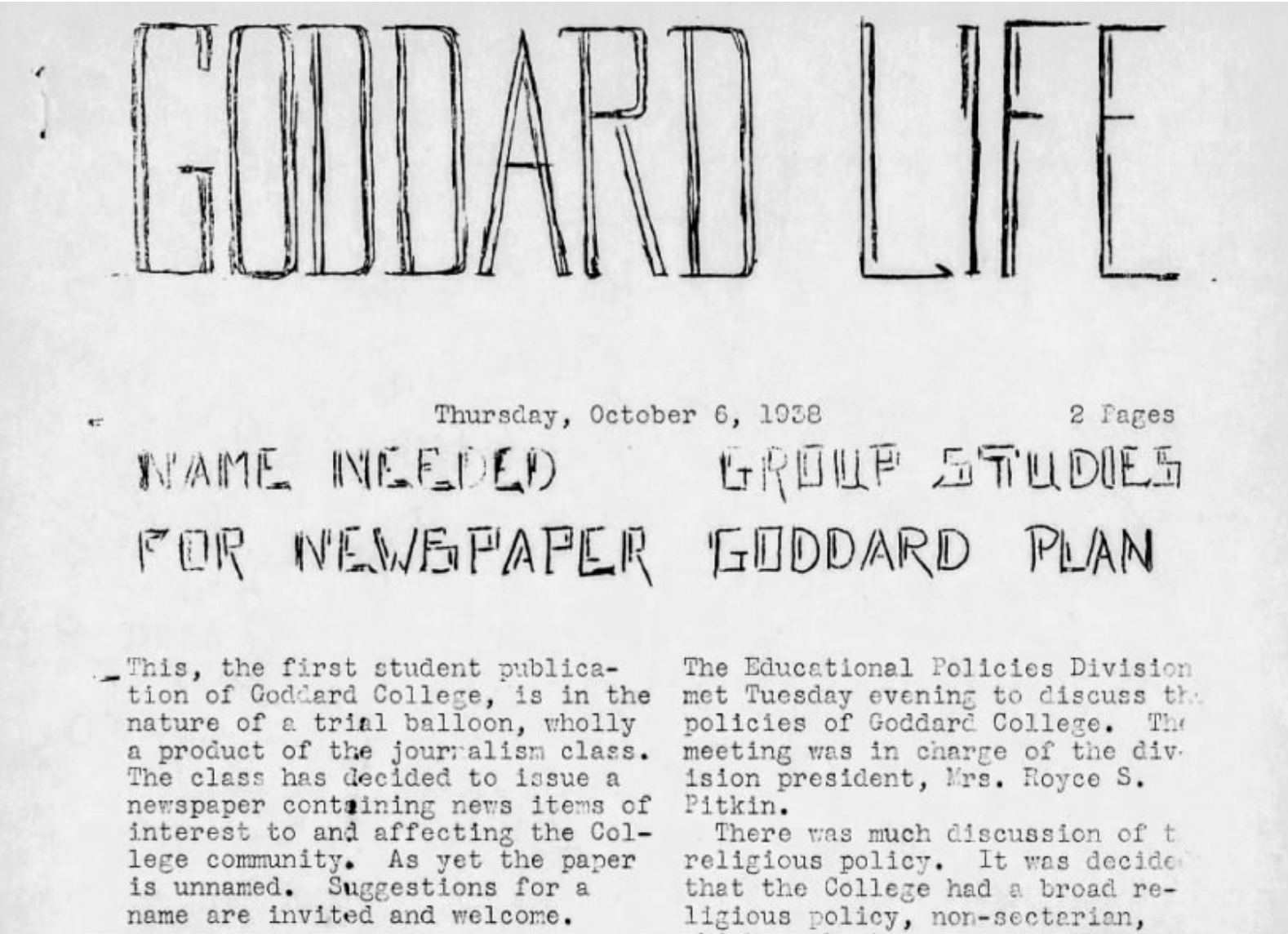
    Thetford Academy (1852) and Goddard College (1938) both had early school newspapers which were short-lived.

    Cover of The Experiment
    Cover of Goddard Life

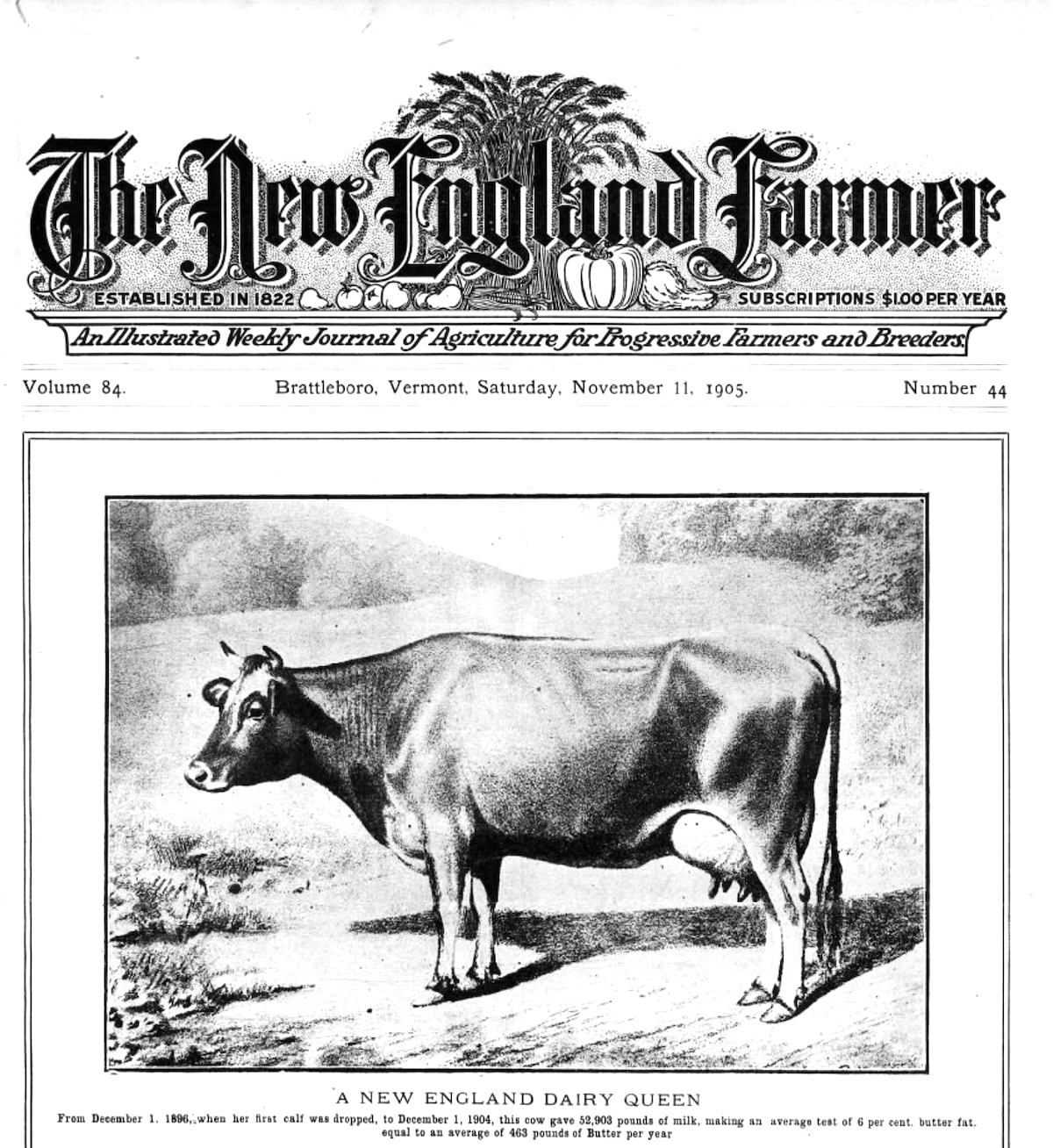
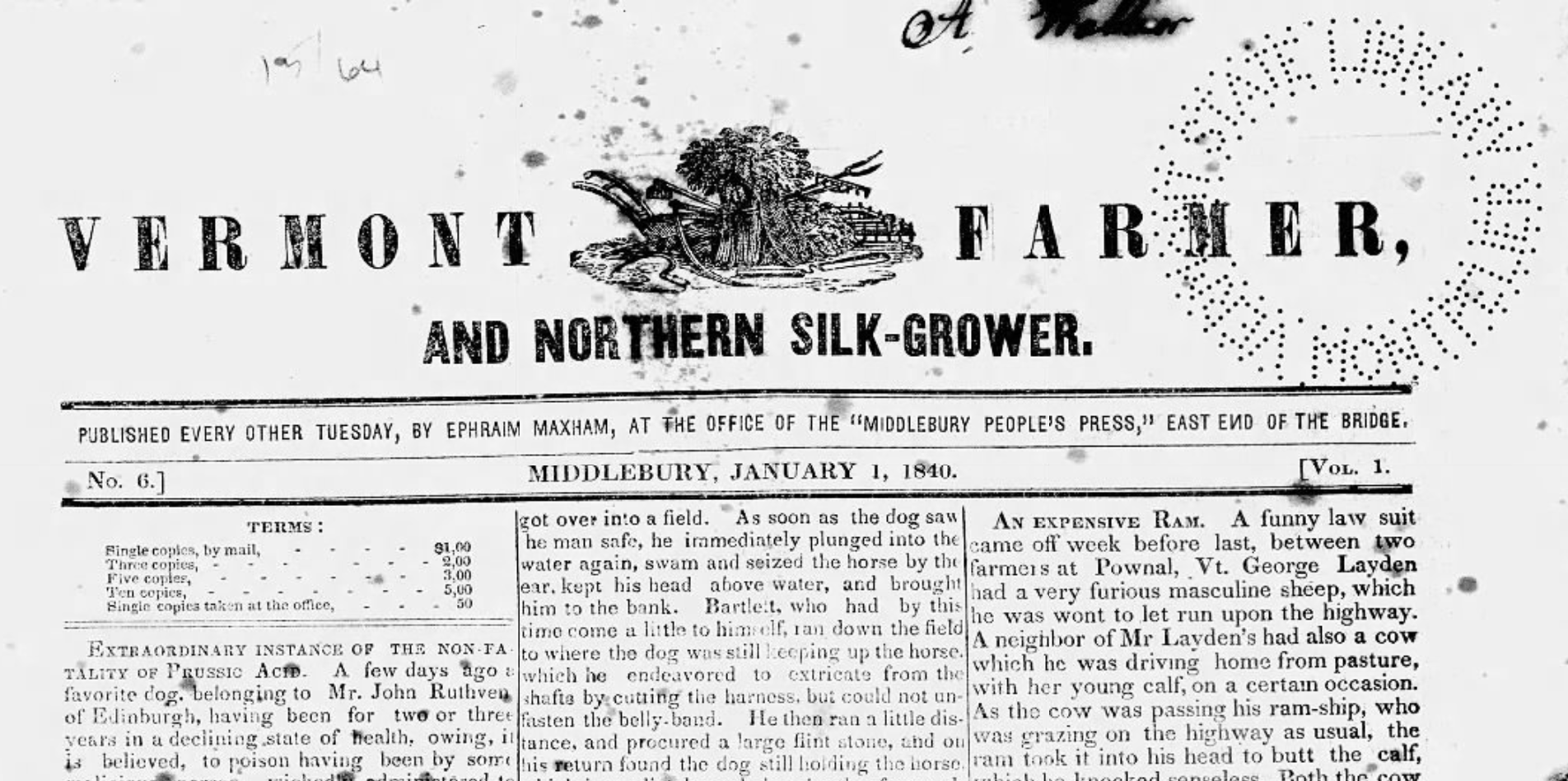
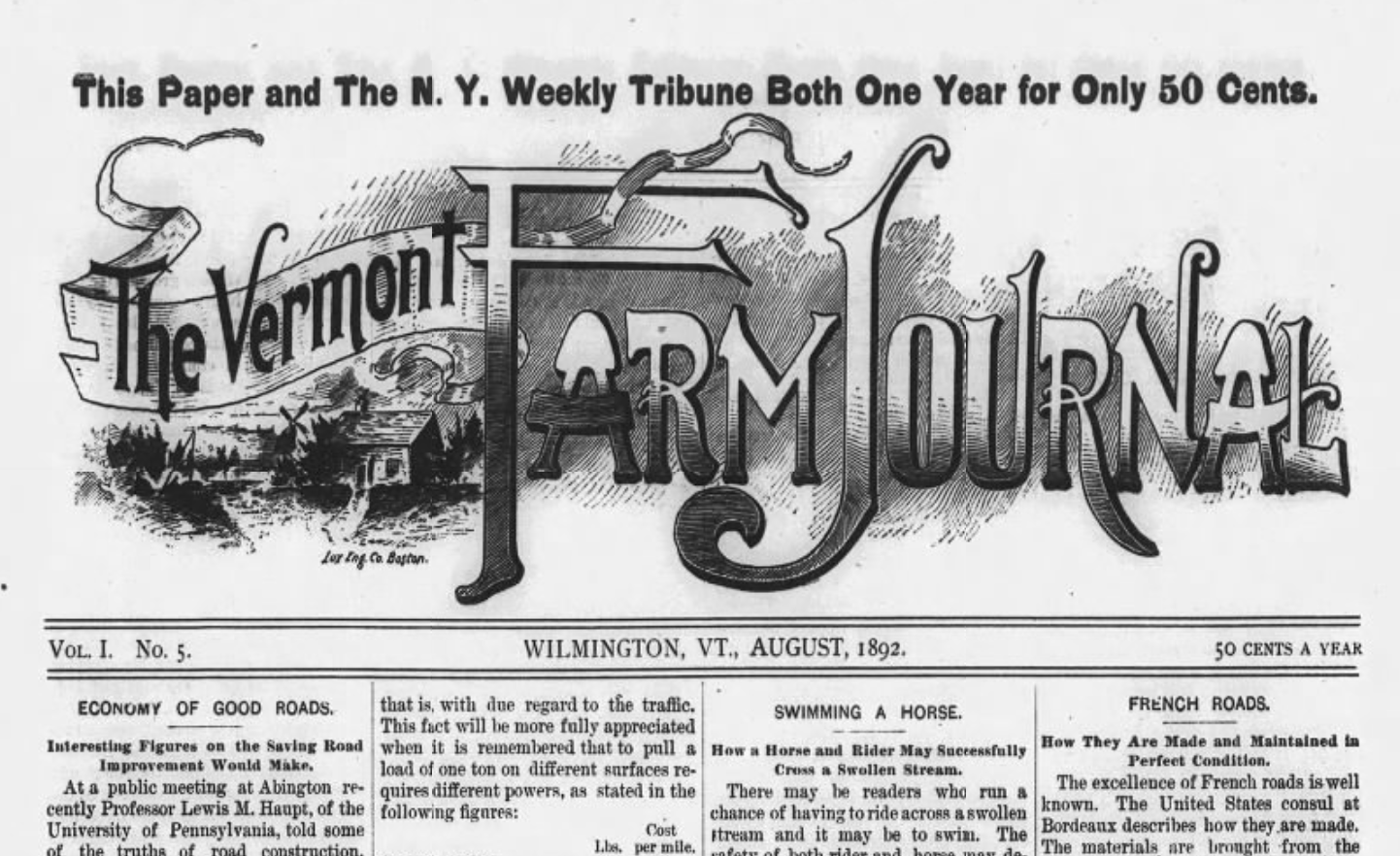
    Of course agricultural matters were well-represented including the New England Farmer out of Brattleboro, the Vermont Farmer and Northern Silk Grower out of St. Albans and  the Vermont Farm Journal out of Wilmington.

    cover of the New England Farm Journal
    cover of Vermont Farmer and Northern Silk Grower
    Cover of the Vermont Farm Journal

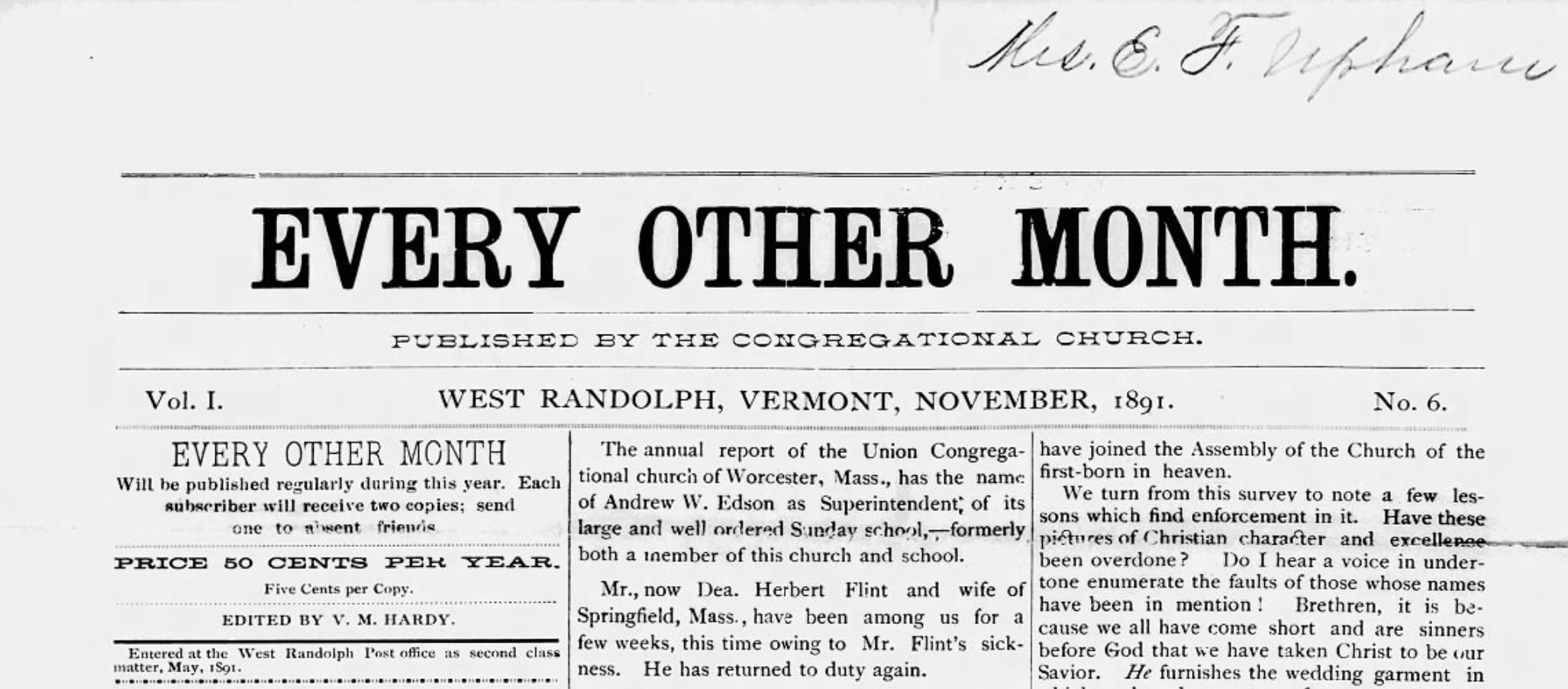
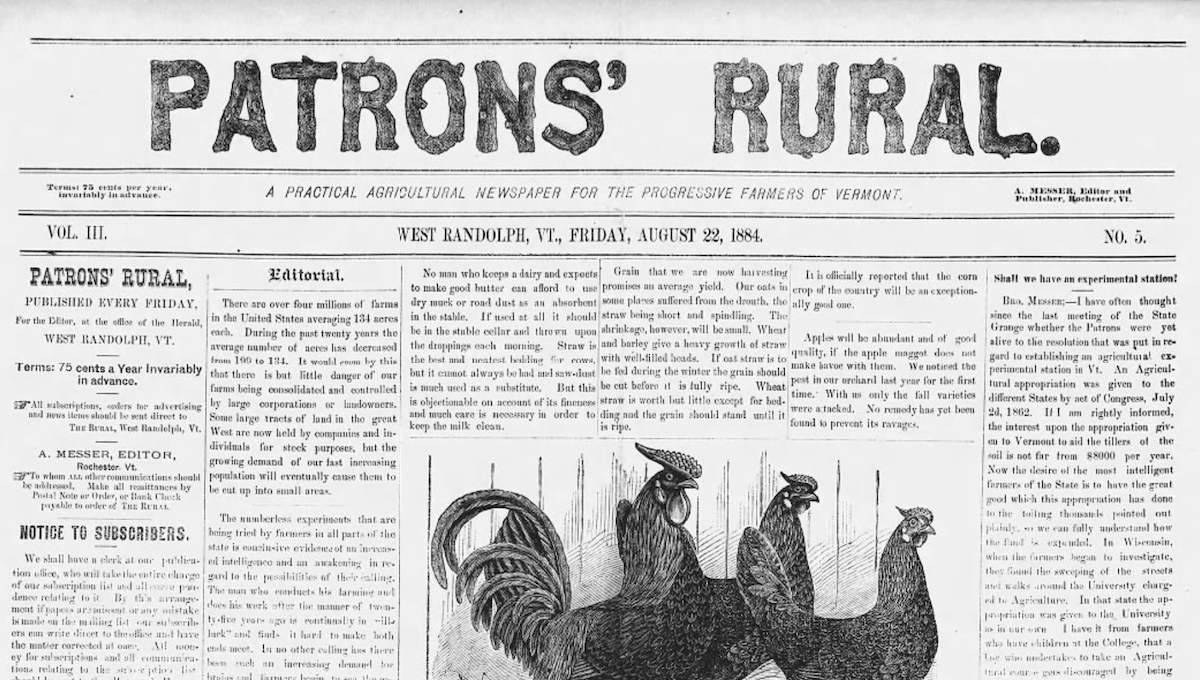
    Right here in town there were a number of short lived newspapers including Every Other Month from the Congregational Church in West Randolph and Patrons Rural for “the progressive farmers of Vermont.”

    Cover of Every Other Month

    Cover of Patrons Rural

    What Will You Find?

    I often like poking around seeing what other people have found in these archives. While Newspapers.com is not social media, there are ways to see what other people have “clipped” from these old papers. Here are a few things I liked.

    Back to the original topic, here are some old stories from and about the old Herald(s).

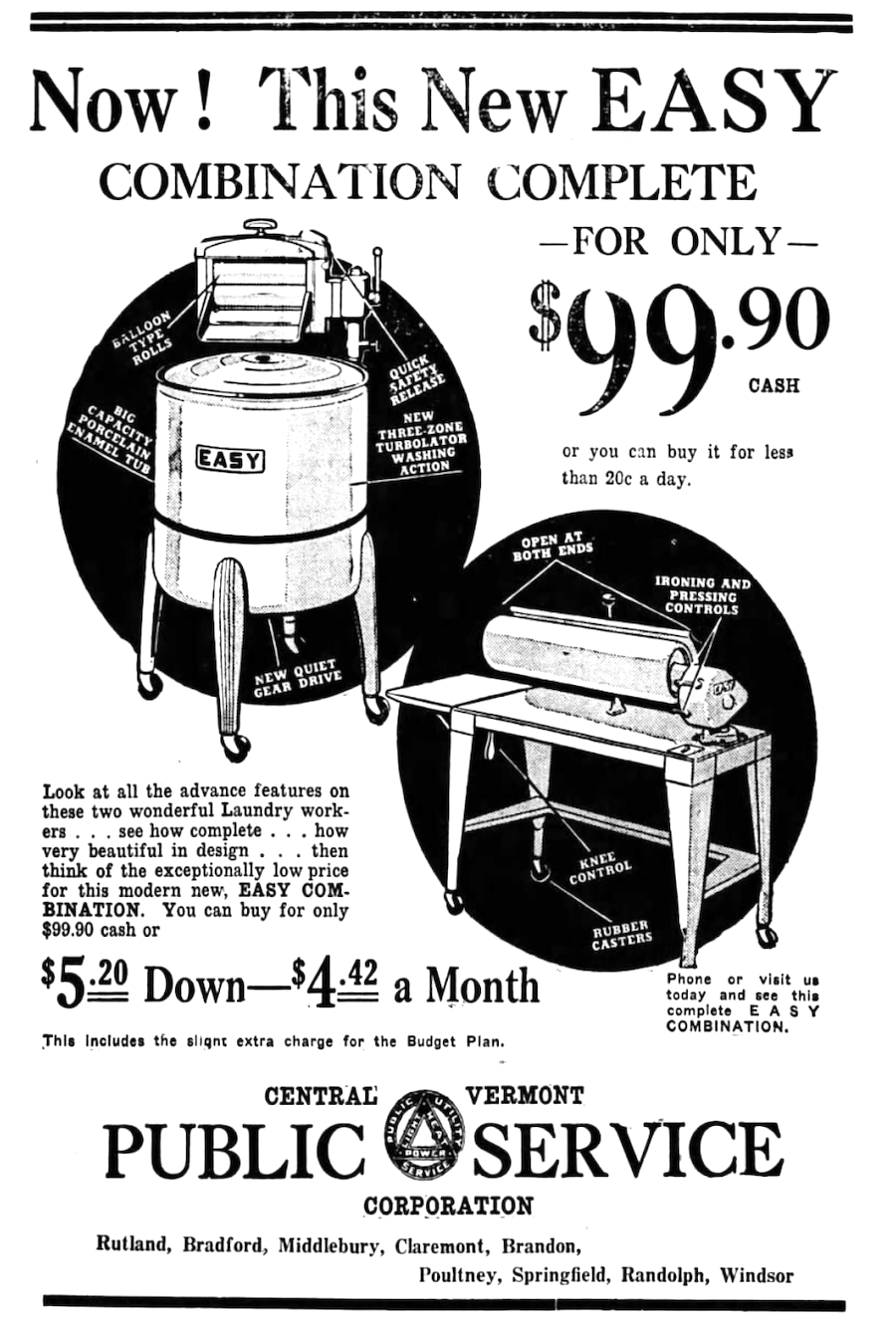
    And, of course, I could browse old advertising forever.

    ad for a laundry combination machine
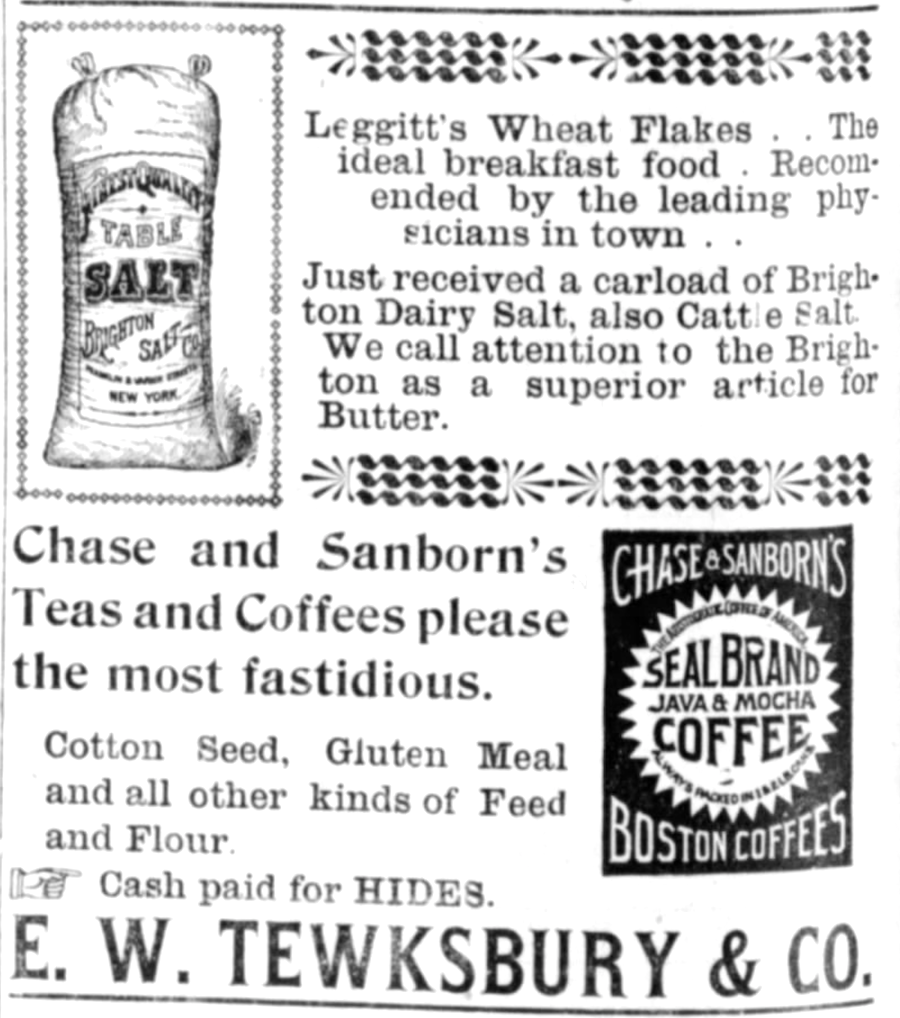
    ad for Twesbury's store from 1899
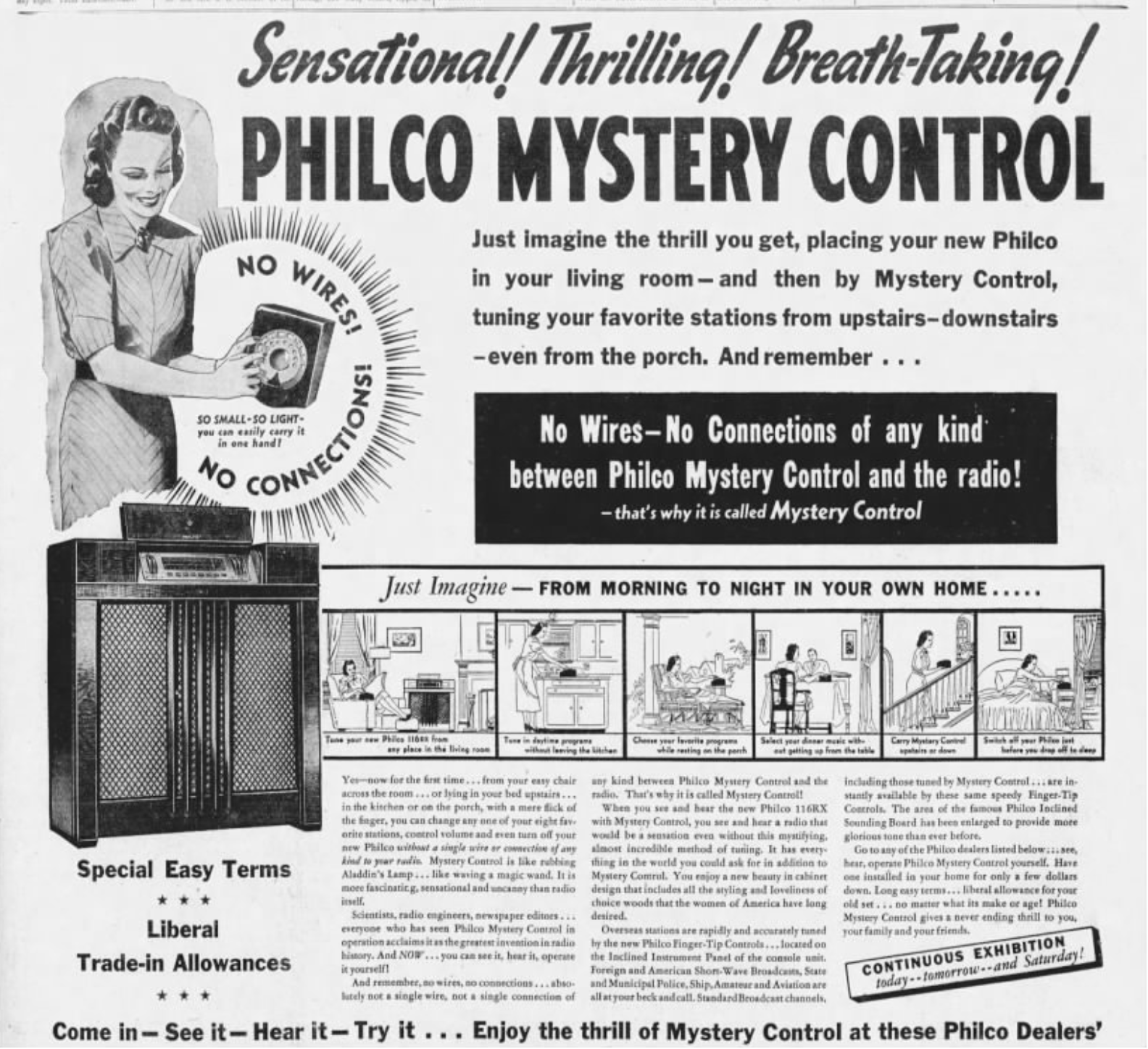
    ad for a philco mystery controller with a woman adjusting a radio, from a distance

    Let us know if you find any treasures.

    A version of this article appeared in the Randolph Vibe.
  • Making history more accessible (we won an award)

    The  Randolph Historical Society won an award from the Vermont Historical Society for our digitization project which put over six hundred photos by Randolph photographers or about Randolph topics. The Award of Merit is from the VHS’s League of Local Historical Societies & Museums Achievement Awards in their Access/Digitzation category.

    See all of our images on the Randolph Historical Society’s Flickr account.

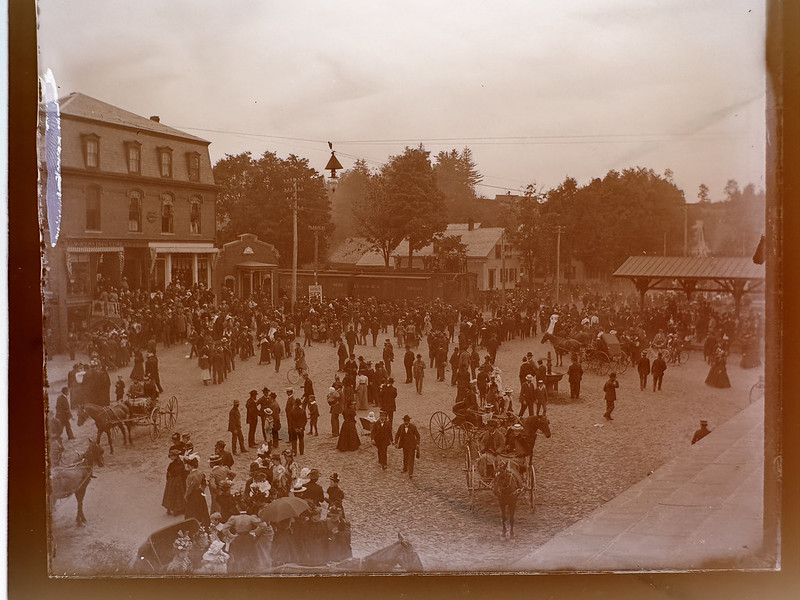
    old photograph of downtown randolph with a LOT pf people hanging around.

    Our application explains, “This project is a digitization and online access project for historical photos of Randolph and by Randolph photographers. It provides extra points of access to a set of newly-created digital archives. It is also a model for shoestring digitization projects for other tiny historical societies.”

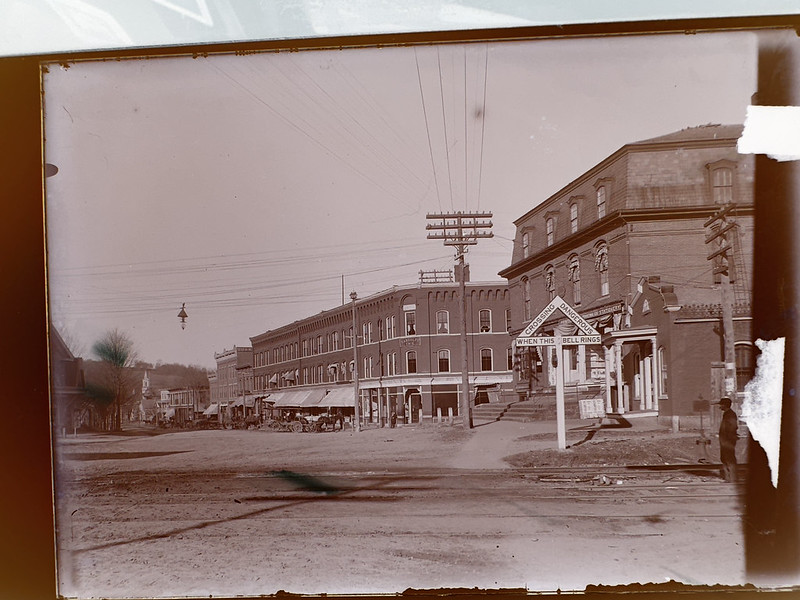
    scene of downtown randolph showing the railroad crossing

    This project involved the work of

    • Forrest Macgregor – project manager, image selection, image correction
    • Devon Blomquist – handwriting deciphering, name identification
    • Sophie Miller – digitization
    • Jessamyn West – uploading, transcribing, metadata

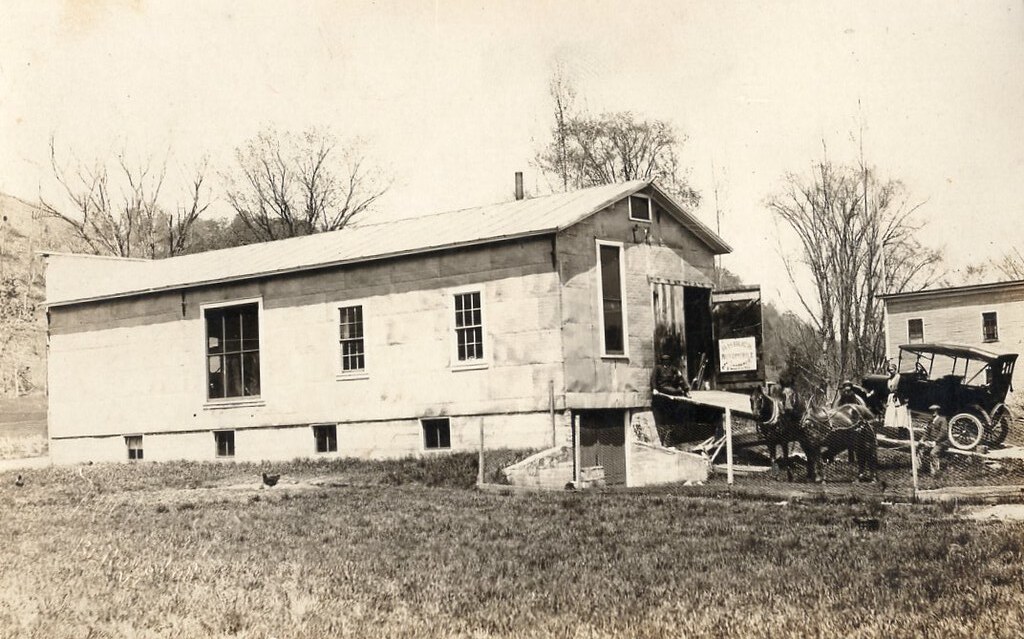
    an old garage in Randolph with a car on an inclined ramp leading in to the garage

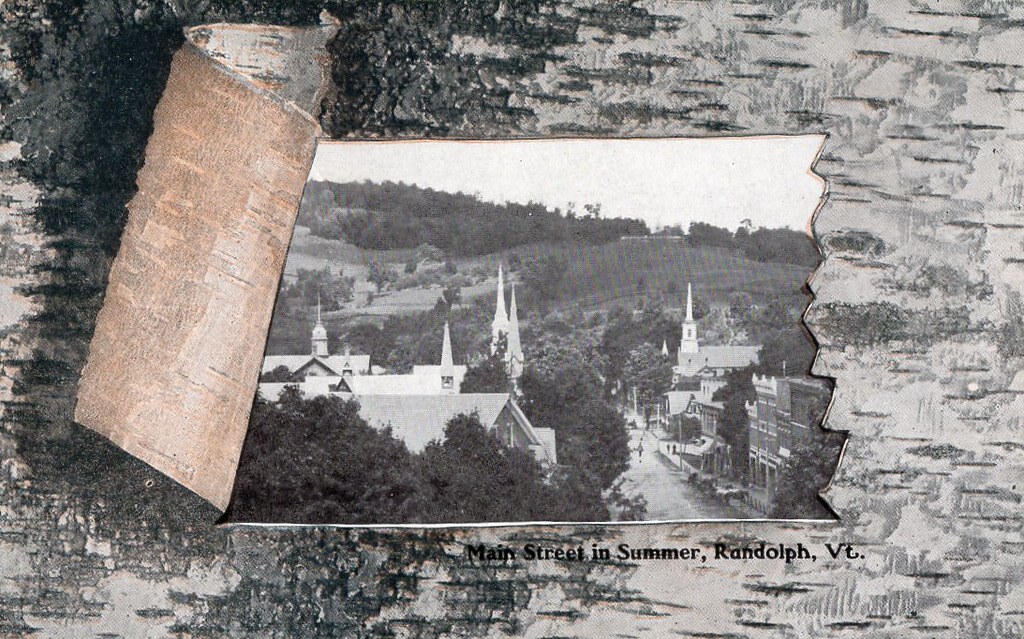
    Items scanned included sets of images such as

    postcard view of randolpg showing mostly curch spires. It's framed by a birch border, peeled back to reveal the image of the town

    The project has uploaded 677 photos since May 2024. They are grouped into sixteen different albums, four of which we’ve embedded on the Randolph Historical Society’s website and been able to share on Facebook which has allowed us to get feedback on some unknown buildings and people, though some of them remain unknown.

    The Randolph Historical Society has other exciting projects in the works, helping bring more of their archives out into the open. Stay tuned!

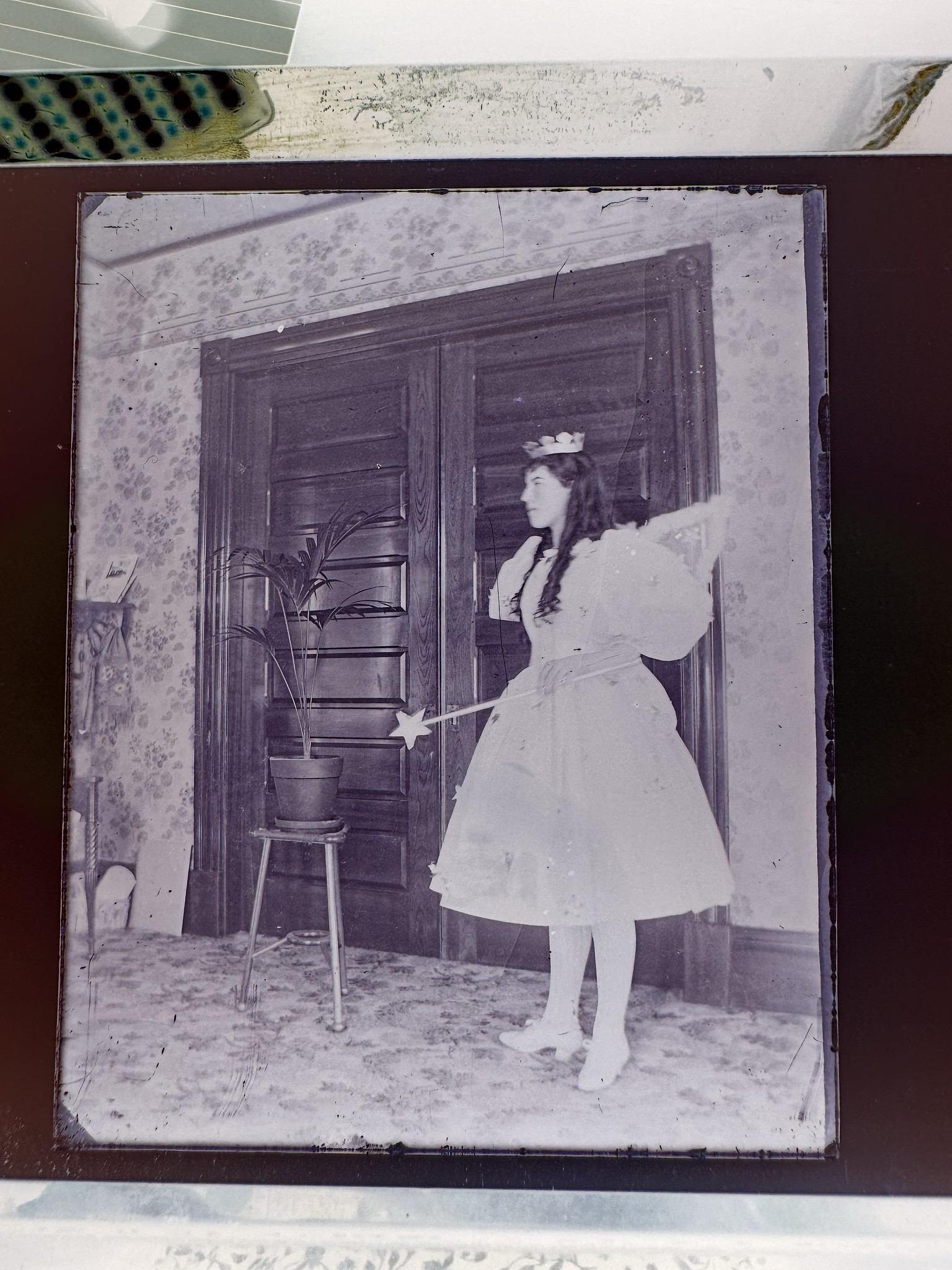
    A woman dressed in a fairy outfit holding a wand with a star on it.

    A version of this article appeared in the Randolph Vibe.
  • Wikipedia: L.T. Sparhawk

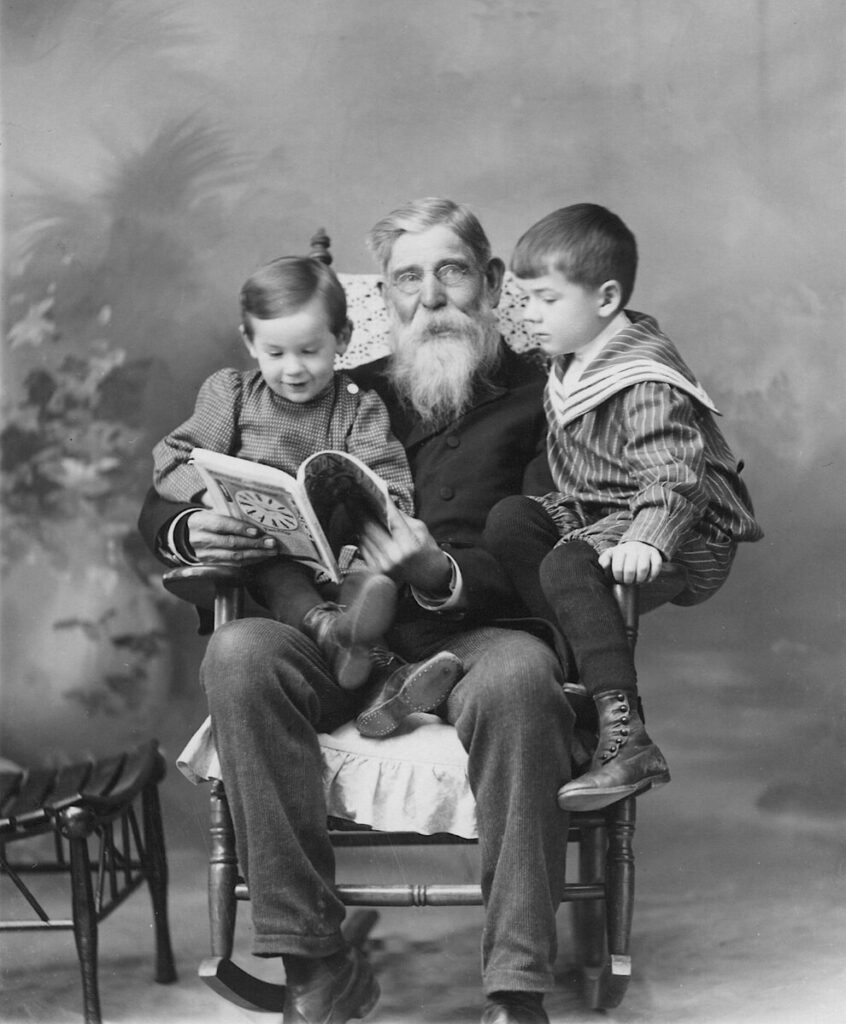
    A black and white photo of an elderly man with a gray beard sitting in a chair and holding a book open. He is looking at the camera while the two children on his lap are looking at the book..
    Luther Tucker (L.T.) Sparhawk (February 11, 1831 – March 4, 1918) was an early American photographer from Randolph, Vermont.

    Luther Tucker Sparhawk was one of Randolph’s early photographers. While also working as a coal dealer, he had a photography studio in six different places in downtown Randolph. RHS has a collection of his photographs which we’ve made available online. We also assembled what we could find out about him into this Wikipedia article. Links go to other pages on Wikipedia.

    Early Life

    Sparhawk was born in Rochester, Vermont, the son of Samuel Sparhawk and Laura (Fitts) Sparhawk, one of eight children. He moved to Randolph, Vermont in 1842 and spent the rest of his life there. His early profession was as a maker and tuner of melodeon reeds and he would often assemble other things for friends and family including fishing rods and childrens’ toys. He also worked as a coal merchant.

    Career

    Sparhawk entered photography by learning to make ambrotypes from R. M. Macintosh in Northfield, Vermont and set up his own studio in Randolph, Sparhawk Studios. While he worked for the rest of his life, the studio itself was located in six different downtown locations and sometimes co-located with a photography retail store and a hair salon.

    Sparhawk’s Studio on Merchant’s Row c. 1869

    He was a progressive photographer, often trying new styles, and there are extant images from him in ambrotype, tintype, glass negative and daguerrotype formats. He was said to be one of the first New Englanders to use the “dry plate” method of photography, and retouch negatives. He designed many of his own mechanisms including his own shutters for high speed photography and assisted other novice photographers with their mechanical photographic issues.

    Sparhawk was an early popularizer of dry-plate photography in the region. His studio would give away dry plate cameras as a loss leader on the condition that people agreed to buy their glass plates from the studio. The studio also sold photographic frames. His daughter Blanche assisted him in the studio until she was married.

    Photographs from his studio are held by the Getty Museum, the Library of Congress and the Beinecke Library.

    Personal life

    He married Josephine Bean on October 31, 1860. They had seven children, three of whom lived to adulthood: George, Willis, and Blanche. His wife predeceased him, dying on November 24, 1915 . Sparhawk died of pneumonia on March 4, 1918.

  • Wikipedia: Calvin Edson

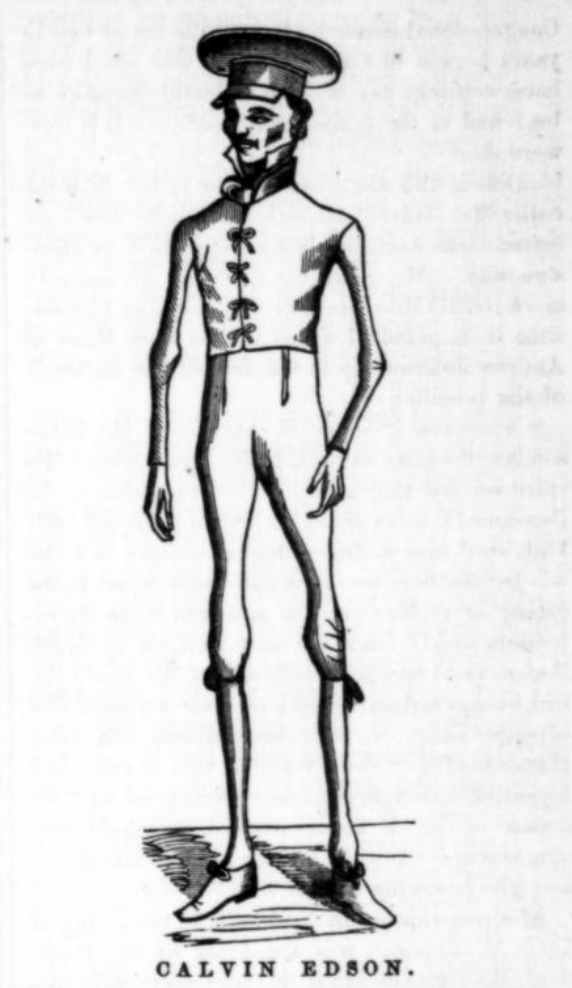
    Illustration of Calvin Edson

    One of the questions we get asked at the RHS is whether we have Calvin Edson’s suit. Edson was A Randolph native who went on to serve in the Army and toured in a circus sideshow. We didn’t know much about him so we did some research and started this Wikipedia article so more people could learn about him. We have not yet found his suit!

    Calvin Edson (born March 4, 1788) was an American man known for being the first well known “Living Skeleton” in American sideshows.

    Early life

    Edson was born in 1788 in Stafford, Connecticut to Eliab and Prudence Edson and the family moved to Randolph, Vermont shortly after he was born. He was one of eleven children. He had one brother, Alexander, who was also emaciated in appearance.

    Edson fought in the Battle of Plattsburgh as a member of the 11th Regiment. After a period of living outdoors with his regiment in 1814 he began to lose weight rapidly. He was 5 feet 3 or 4 inches tall and eventually reported to weigh only 45 pounds. Other than his emaciated appearance, he was in decent physical health.

    Sideshow performing

    Edson performed as the Living Skeleton in circus shows, wearing a tight-fitting black suit, the first popular “skeleton” performer. In 1831 he traveled to Europe where his promotional materials said that he had been “introduced to the College of Physicians and Surgeons” in Paris where he was claimed to have been called “the greatest phenomena of nature the world has ever beheld.” Edson traveled around the US with broadsheets announcing his performances where he put himself on display and also danced. These broadsheets had illustrations of Edson on them and were later reproduced in newspapers. He was said to have earned $15 a week for his work.He performed in a theater production as a character called Jeremiah Thin.

    Edson’s death was reported in newspapers nationwide in 1832 attributed to oculist John Scudder Jr. of Scudder’s American Museum. It was claimed that his body was stolen from its tomb and inspected, and he was said “to have had a tapeworm twelve to fourteen feet in length.” He was, in fact, alive and had just been on a short trip. Edson toured several museums in New York through the 1830s.

    Personal life

    Edson was married to Rachael Cutler Edson in 1822 and had four children; two of his daughters were deaf and mute.

  • Early Randolphian Ben Robinson

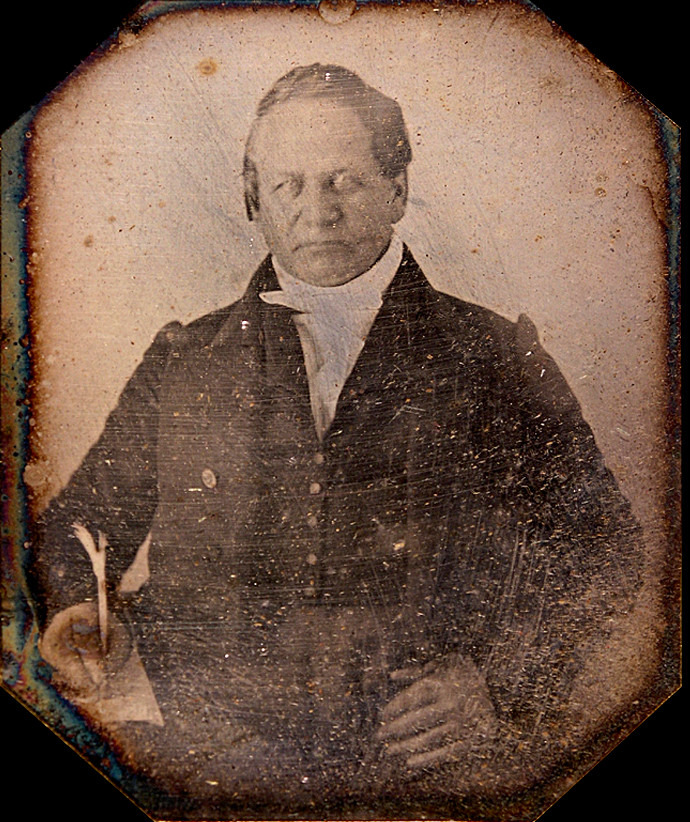
    [Alexander Twilight, not Ben Robinson, Randolph resident from 1815-1821]

    Randolph’s early history predates the history of Vermont. The first people to settle this area “from away” were in the East Valley, near the Second Branch of the White River where there was a rudimentary route to Canada as well as backcountry trails used by indigenous residents and transient trappers and traders. The first white settlers squatted the land that was to become Randolph in the 1770s and the town was established shortly thereafter in 1781. Vermont entered the US in 1791. 

    Older accounts of the state mostly discuss the achievements of these white men and the history of Vermont, including the fact that the early Vermont Republic banned adult slavery. However, the legacy of Black people’s experiences in Vermont were not quite as straightforward or well-documented. 

    Alexander Twilight, whose life has been extensively researched, did six years of schooling at Randolph’s Orange County Grammar School–on what is now the VTSU campus–but eventually settled in Middlebury. 

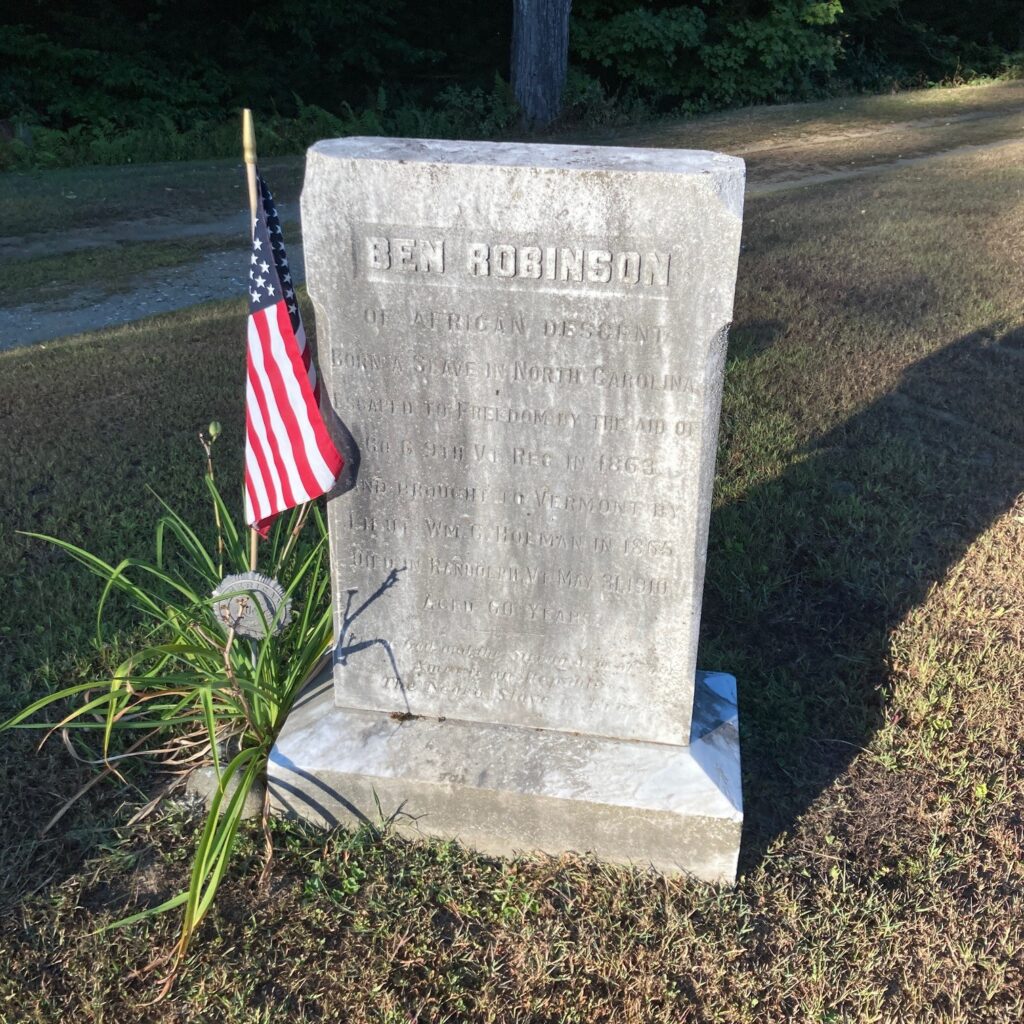
    Ben Robinson was one of the first documented African American people to have settled in the Randolph/Braintree area, but people mostly only know him from his gravestone in the South View Cemetery. Here’s what else we know about him–his story has a lot of familiar Randolph names and places in it.

    According to the Herald, Robinson was born an enslaved person in New Bern, North Carolina. Members of the Ninth Vermont Regiment encouraged him to come North with them when he was a teenaged boy. He left with them in 1863 where he worked for and possibly fought alongside members of the regiment. At the time, his surname was Furbey after the family who had enslaved him. He changed it to Robinson, the name “of an earlier master,” which was the name he preferred. 

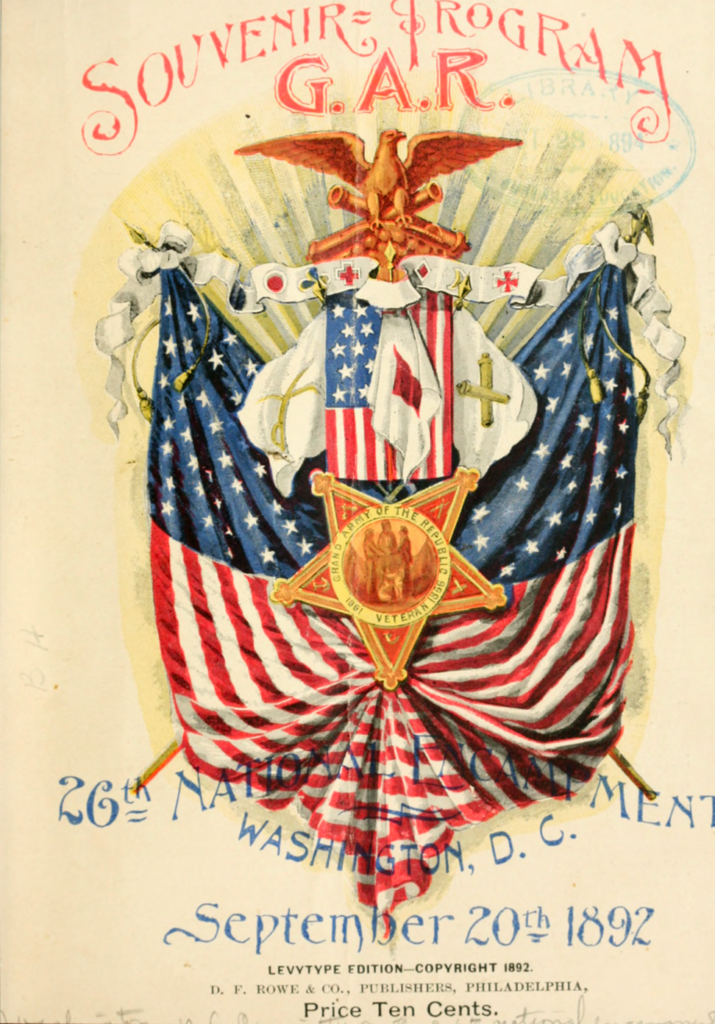
    [Souvenir program from the 1892 National Encampment]

    He arrived in Vermont after the war in 1865, working for Lieutenant William Holman. Holman, who lived in Braintree, sent the young Robinson to school “with white boys” and staked him $200 (about $5000 in today’s money) to set up a life for himself upon his 21st birthday. 

    Of note is the fact that while Vermont did not allow “adult slavery” there were many loopholes in this provision allowing for both indentured servitude and legal enslavement of children. These loopholes were finally closed by a statewide vote in 2022. Robinson’s status as a free man is not entirely clear until the point at which he left Holman’s home. 

    He remained close with veterans. In 1892 he went to Washington DC with his comrade John Manney for the annual G.A.R. (Grand Army of the Republic) National Encampment, a nationwide veterans gathering. He attended to try to get more information about what had happened to his father, but he was unsuccessful.

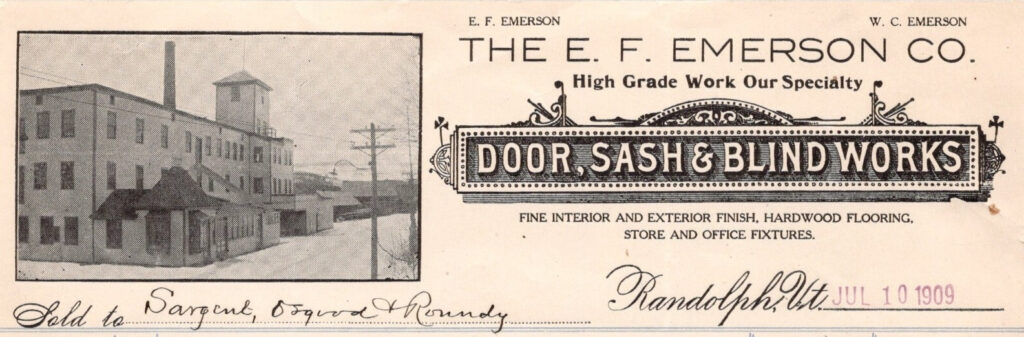
    Robinson’s obituary notes that he lost the money he was given by Holman “through misplaced confidence in the man to whom he loaned it” but he continued to work locally. He found employment first on farms as a milk driver for E. N. Rising (where he also lived), a job at Salisbury’s mill, a porter for the Red Lion, and then later as a night watchman in local mills. He worked for W. H.  Du Bois in the late 1890s when he was living on Pearl Street. He was working as a night watchman at the E. F. Emerson company–where he helped the company avoid a serious fire–when he retired because of health reasons in 1900. When former President Theodore Roosevelt came through Vermont, Robinson was on hand to listen to his speech and was said to have shaken the President’s hand.

    [a receipt from E. F. Emerson]

    Robinson died a few years later of heart disease on June 2nd, 1910, at Park Street home of Charles Flint where he was living. His obituary describes him as the only Black person in Randolph, “honest, quiet, well-meaning and worthy of respect.” The pallbearers at his funeral at the Methodist church were John Manney and three of his classmates: E. S. Abbott, Allen Flint Jr., and Henry Seymour. Robinson was said to have had “a little property” but left no will so it is believed that, after his burial expenses were paid, his estate went to the town.

    the grave of Ben Robinson
    A version of this article appeared in the Randolph Vibe and the White River Valley Herald

    His gravestone, made of Italian marble, was placed in the South View Cemetery by the U. S. Grant Post No. 96 of the G A.R. on Memorial Day 1912. It reads, “Ben Robinson of African descent born a slave in North Carolina. Escaped to freedom by the aid of Co. G, 9th VT Reg. in 1863 and brought to Vermont by Lieut. Wm. G. Holman in 1865. Died in Randolph, VT May 31, 1910 aged 60 years. Under God and the Strong Arm of our American Republic, the Negro Slave is Free.” Next to it is a G.A.R. medallion and an American flag. Someone regularly places flowers beside it.