Tag: wikipedia

  • Wikipedia: L.T. Sparhawk

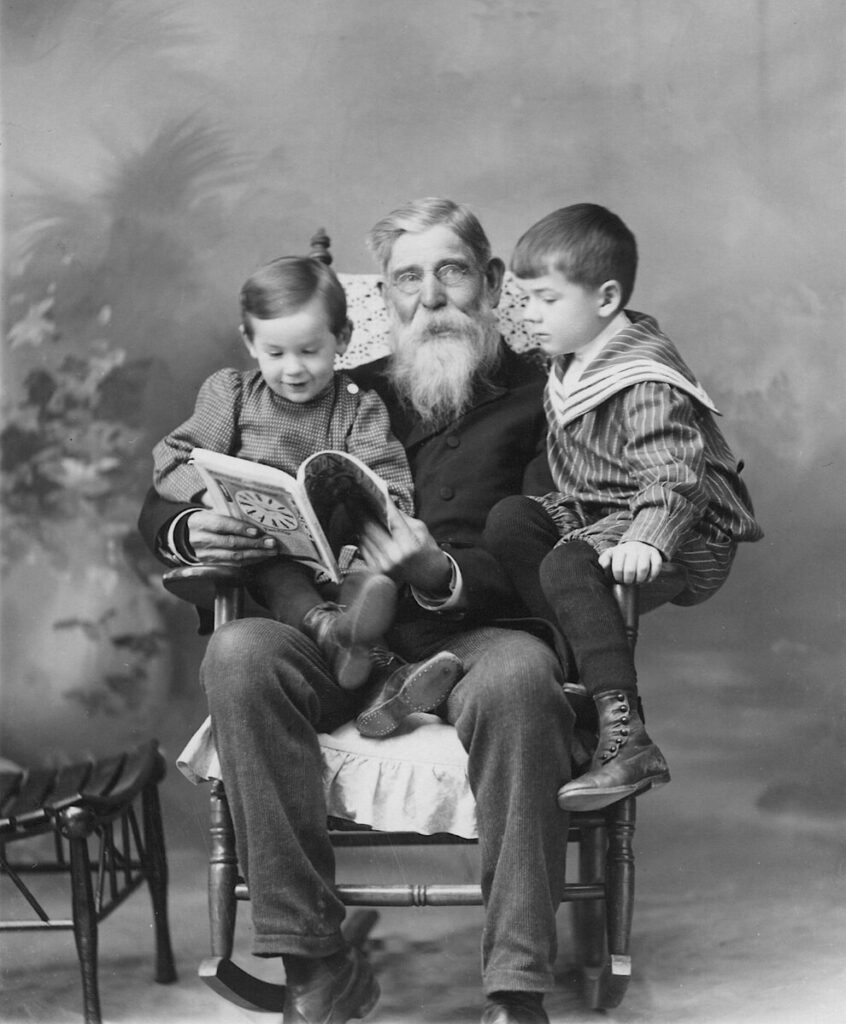
    A black and white photo of an elderly man with a gray beard sitting in a chair and holding a book open. He is looking at the camera while the two children on his lap are looking at the book..
    Luther Tucker (L.T.) Sparhawk (February 11, 1831 – March 4, 1918) was an early American photographer from Randolph, Vermont.

    Luther Tucker Sparhawk was one of Randolph’s early photographers. While also working as a coal dealer, he had a photography studio in six different places in downtown Randolph. RHS has a collection of his photographs which we’ve made available online. We also assembled what we could find out about him into this Wikipedia article. Links go to other pages on Wikipedia.

    Early Life

    Sparhawk was born in Rochester, Vermont, the son of Samuel Sparhawk and Laura (Fitts) Sparhawk, one of eight children. He moved to Randolph, Vermont in 1842 and spent the rest of his life there. His early profession was as a maker and tuner of melodeon reeds and he would often assemble other things for friends and family including fishing rods and childrens’ toys. He also worked as a coal merchant.

    Career

    Sparhawk entered photography by learning to make ambrotypes from R. M. Macintosh in Northfield, Vermont and set up his own studio in Randolph, Sparhawk Studios. While he worked for the rest of his life, the studio itself was located in six different downtown locations and sometimes co-located with a photography retail store and a hair salon.
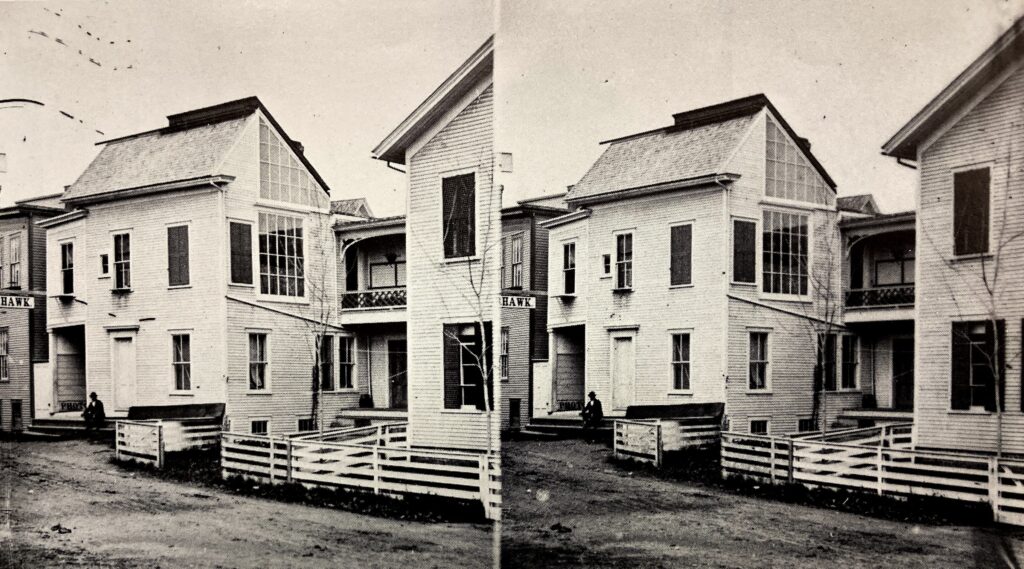
    Sparhawk’s Studio on Merchant’s Row c. 1869

    He was a progressive photographer, often trying new styles, and there are extant images from him in ambrotype, tintype, glass negative and daguerrotype formats. He was said to be one of the first New Englanders to use the “dry plate” method of photography, and retouch negatives. He designed many of his own mechanisms including his own shutters for high speed photography and assisted other novice photographers with their mechanical photographic issues.

    Sparhawk was an early popularizer of dry-plate photography in the region. His studio would give away dry plate cameras as a loss leader on the condition that people agreed to buy their glass plates from the studio. The studio also sold photographic frames. His daughter Blanche assisted him in the studio until she was married.

    Photographs from his studio are held by the Getty Museum, the Library of Congress and the Beinecke Library.

    Personal life

    He married Josephine Bean on October 31, 1860. They had seven children, three of whom lived to adulthood: George, Willis, and Blanche. His wife predeceased him, dying on November 24, 1915 . Sparhawk died of pneumonia on March 4, 1918.
  • Wikipedia: Calvin Edson

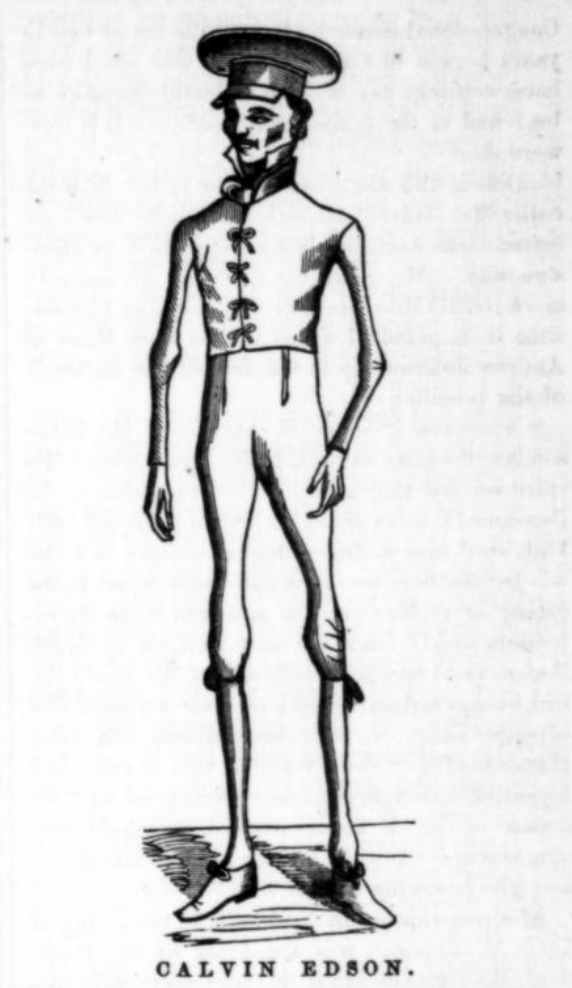
    Illustration of Calvin Edson

    One of the questions we get asked at the RHS is whether we have Calvin Edson’s suit. Edson was A Randolph native who went on to serve in the Army and toured in a circus sideshow. We didn’t know much about him so we did some research and started this Wikipedia article so more people could learn about him. We have not yet found his suit!

    Calvin Edson (born March 4, 1788) was an American man known for being the first well known “Living Skeleton” in American sideshows.

    Early life

    Edson was born in 1788 in Stafford, Connecticut to Eliab and Prudence Edson and the family moved to Randolph, Vermont shortly after he was born. He was one of eleven children. He had one brother, Alexander, who was also emaciated in appearance.

    Edson fought in the Battle of Plattsburgh as a member of the 11th Regiment. After a period of living outdoors with his regiment in 1814 he began to lose weight rapidly. He was 5 feet 3 or 4 inches tall and eventually reported to weigh only 45 pounds. Other than his emaciated appearance, he was in decent physical health.

    Sideshow performing

    Edson performed as the Living Skeleton in circus shows, wearing a tight-fitting black suit, the first popular “skeleton” performer. In 1831 he traveled to Europe where his promotional materials said that he had been “introduced to the College of Physicians and Surgeons” in Paris where he was claimed to have been called “the greatest phenomena of nature the world has ever beheld.” Edson traveled around the US with broadsheets announcing his performances where he put himself on display and also danced. These broadsheets had illustrations of Edson on them and were later reproduced in newspapers. He was said to have earned $15 a week for his work.He performed in a theater production as a character called Jeremiah Thin.

    Edson’s death was reported in newspapers nationwide in 1832 attributed to oculist John Scudder Jr. of Scudder’s American Museum. It was claimed that his body was stolen from its tomb and inspected, and he was said “to have had a tapeworm twelve to fourteen feet in length.” He was, in fact, alive and had just been on a short trip. Edson toured several museums in New York through the 1830s.

    Personal life

    Edson was married to Rachael Cutler Edson in 1822 and had four children; two of his daughters were deaf and mute.