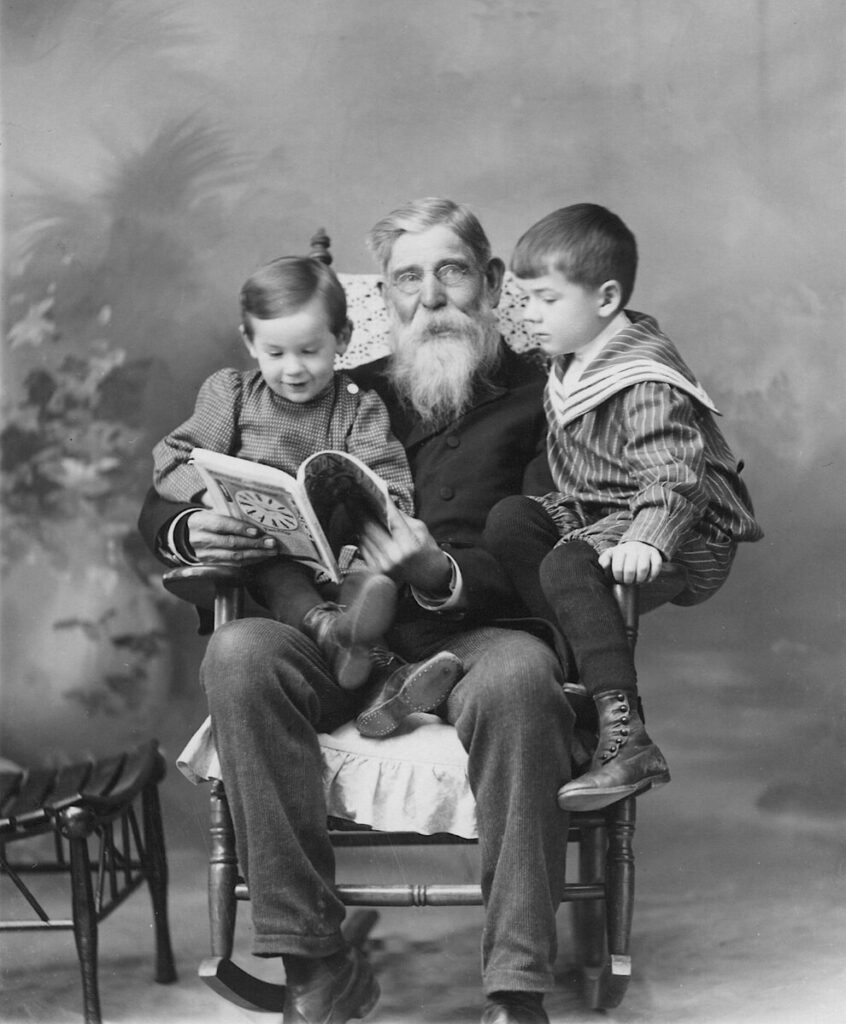
Luther Tucker Sparhawk was one of Randolph’s early photographers. While also working as a coal dealer, he had a photography studio in six different places in downtown Randolph. RHS has a collection of his photographs which we’ve made available online. We also assembled what we could find out about him into this Wikipedia article. Links go to other pages on Wikipedia.
Early Life
Sparhawk was born in Rochester, Vermont, the son of Samuel Sparhawk and Laura (Fitts) Sparhawk, one of eight children. He moved to Randolph, Vermont in 1842 and spent the rest of his life there. His early profession was as a maker and tuner of melodeon reeds and he would often assemble other things for friends and family including fishing rods and childrens’ toys. He also worked as a coal merchant.
Career
Sparhawk entered photography by learning to make ambrotypes from R. M. Macintosh in Northfield, Vermont and set up his own studio in Randolph, Sparhawk Studios. While he worked for the rest of his life, the studio itself was located in six different downtown locations and sometimes co-located with a photography retail store and a hair salon.
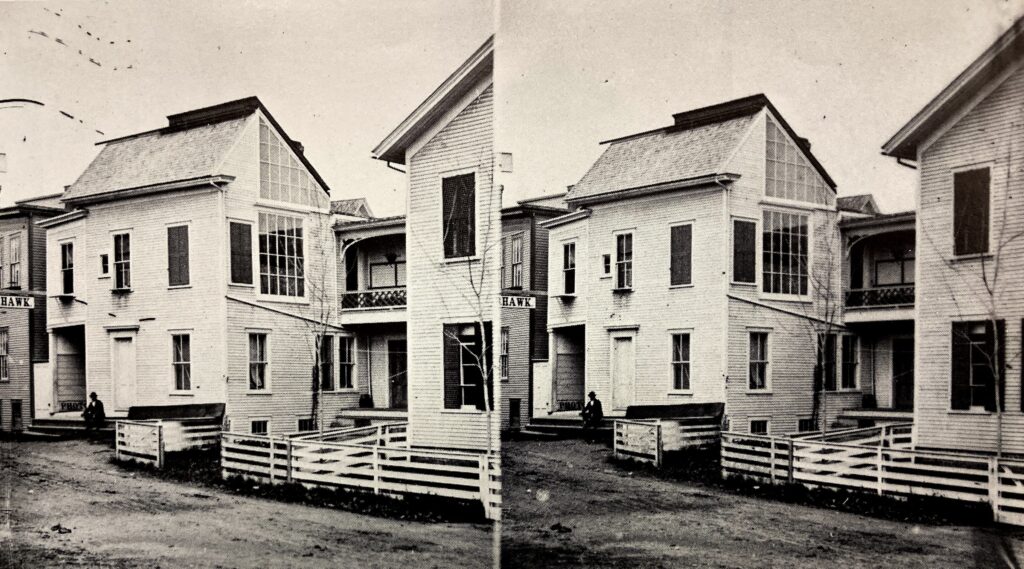
He was a progressive photographer, often trying new styles, and there are extant images from him in ambrotype, tintype, glass negative and daguerrotype formats. He was said to be one of the first New Englanders to use the “dry plate” method of photography, and retouch negatives. He designed many of his own mechanisms including his own shutters for high speed photography and assisted other novice photographers with their mechanical photographic issues.
Sparhawk was an early popularizer of dry-plate photography in the region. His studio would give away dry plate cameras as a loss leader on the condition that people agreed to buy their glass plates from the studio. The studio also sold photographic frames. His daughter Blanche assisted him in the studio until she was married.
Photographs from his studio are held by the Getty Museum, the Library of Congress and the Beinecke Library.
Personal life
He married Josephine Bean on October 31, 1860. They had seven children, three of whom lived to adulthood: George, Willis, and Blanche. His wife predeceased him, dying on November 24, 1915 . Sparhawk died of pneumonia on March 4, 1918.
Leave a Reply